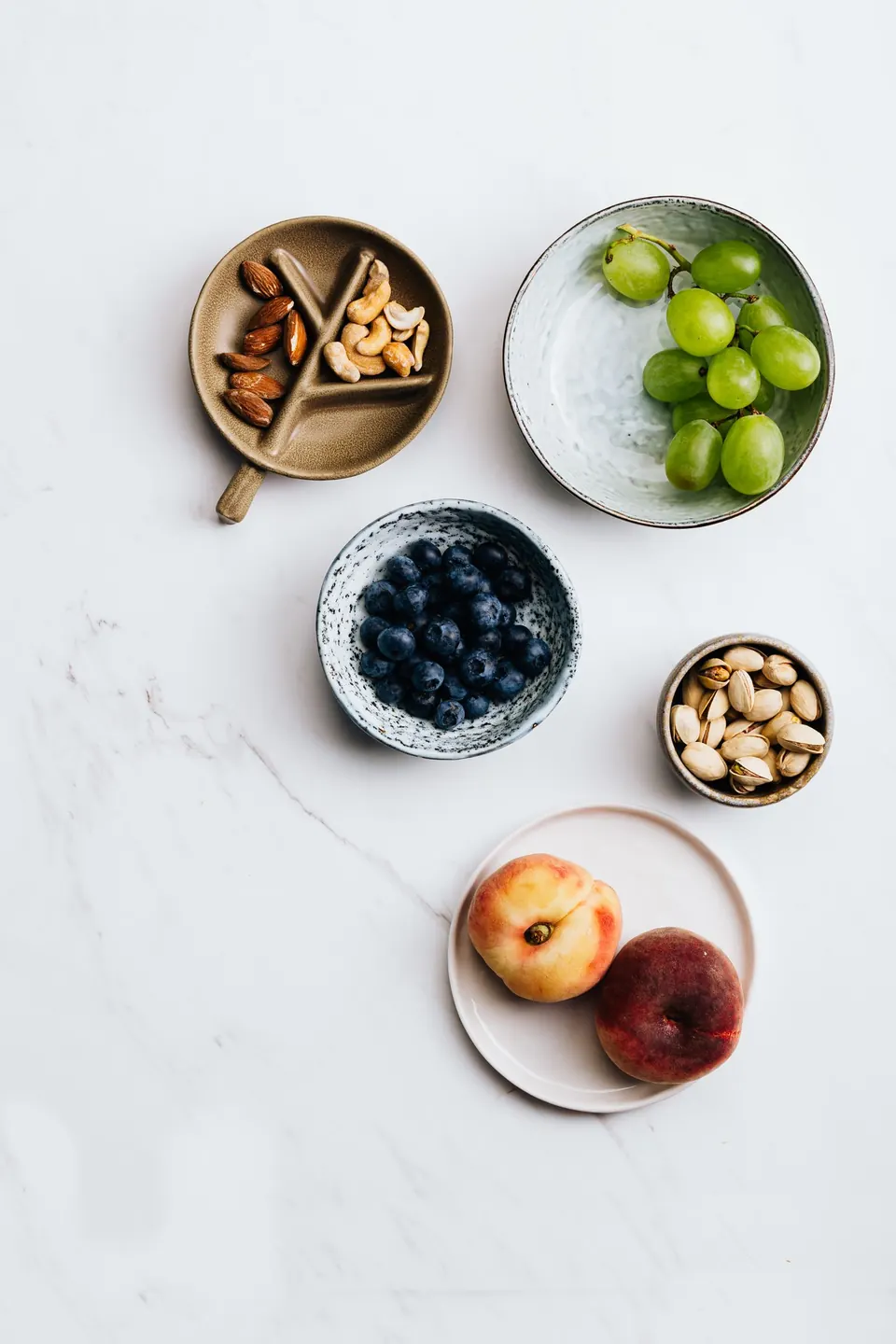
Juice or Whole Fruit? Fruit Calories per Cup and Piece, Plus No-Sugar Smoothies
The orange you eat is not the orange you drink. These are the numbers that show the difference.
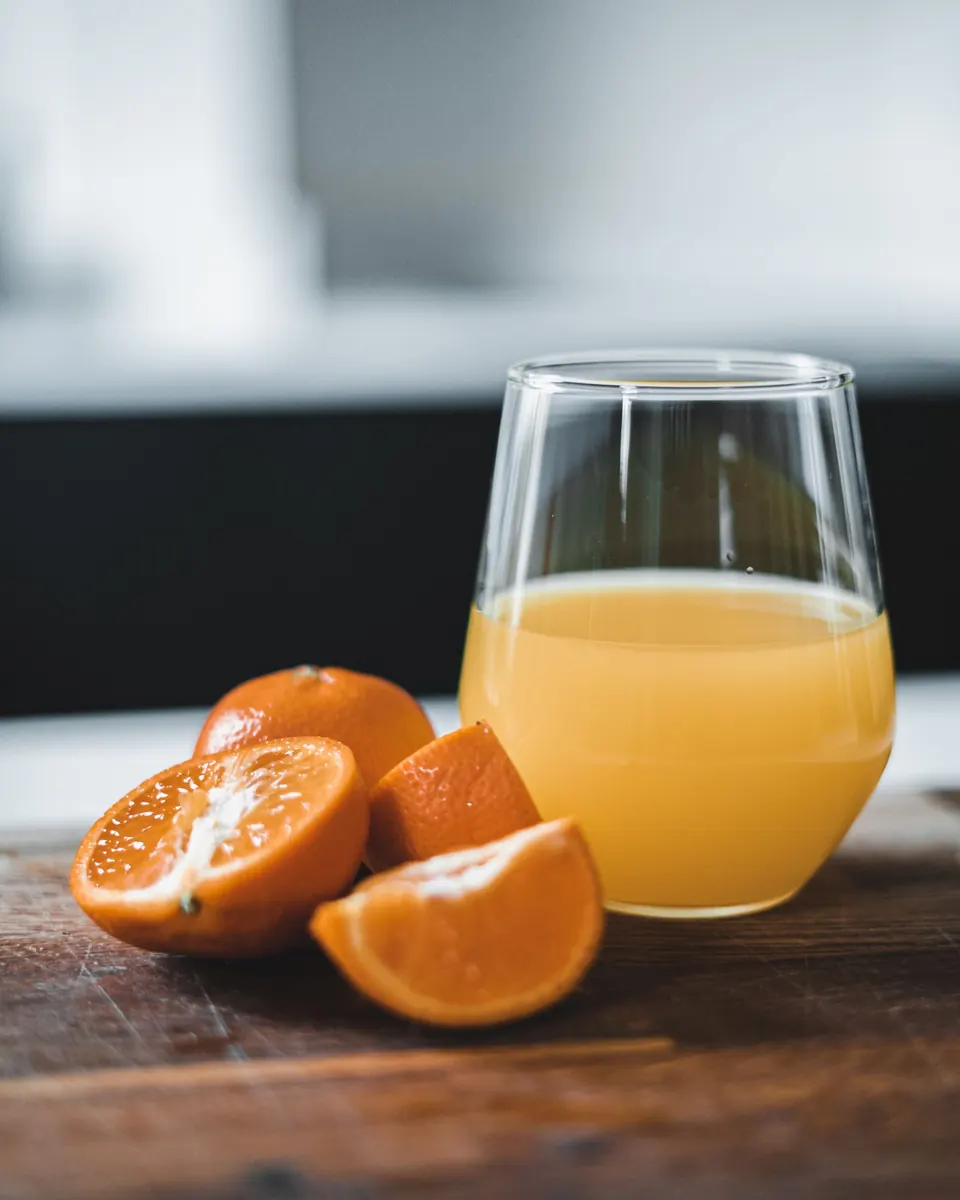
A morning glass of juice looks like the healthiest possible start to the day, and it really does come from fruit. But the gap between drinking an orange and eating one is bigger than calories: there is the fiber, how full you feel, and how many oranges ended up in that glass without you noticing.
In this guide we compared juice with whole fruit using data from the US Department of Agriculture (USDA), then lined up the fruits we love by the cup and by the piece, not per 100 g, so you know what you are actually eating. At the end you will find sweet smoothie ideas made from the same fruit, with no added sugar.
In this guide 10
- How many calories in a glass of orange juice?
- Table: juice vs whole fruit
- Why does whole fruit fill you up more than juice?
- Fruit calories per cup and per piece
- Fruit calorie chart by portion
- Easy ways to eat more fruit instead of juice
- Smoothies with no added sugar: how to count them
- How many calories in a smoothie? Count it by ingredient
- Smoothie ideas sweetened by the fruit itself
- Make fruit keep you full
How many calories in a glass of orange juice?
A cup of fresh orange juice (248 g) has 112 calories and 20.8 g of sugar, and only 0.5 g of fiber. A medium orange (140 g) has 69 calories, 11.9 g of sugar and 3.1 g of fiber.
The catch is in the glass. According to USDA, one orange gives about 86 g of juice, so a single cup means squeezing 3 oranges. Hardly anyone eats 3 oranges in a row, yet we drink them in a minute without a second thought.
Apples tell the same story. A cup of unsweetened apple juice has 114 calories and 0.5 g of fiber, while a medium apple with its skin has 95 calories and 4.4 g of fiber. The whole apple has fewer calories than the glass and roughly 9 times the fiber.
Table: juice vs whole fruit
| Food | Calories | Sugarsg | Fiberg |
|---|---|---|---|
| Orange juice1 cup, 248 gUSDA | 112 | 20.8 | 0.5 |
| Orange juicejuice of 1 orange, 86 gUSDA | 39 | 7.2 | 0.2 |
| Orange1 medium, 140 gUSDA | 69 | 11.9 | 3.1 |
| Apple juice1 cup, 248 gUSDA | 114 | 23.9 | 0.5 |
| Apple, with skin1 medium, 182 gUSDA | 95 | 18.9 | 4.4 |
Sweetened juice or "orange flavored drinks" have more sugar than these numbers, so check the label.
Why does whole fruit fill you up more than juice?
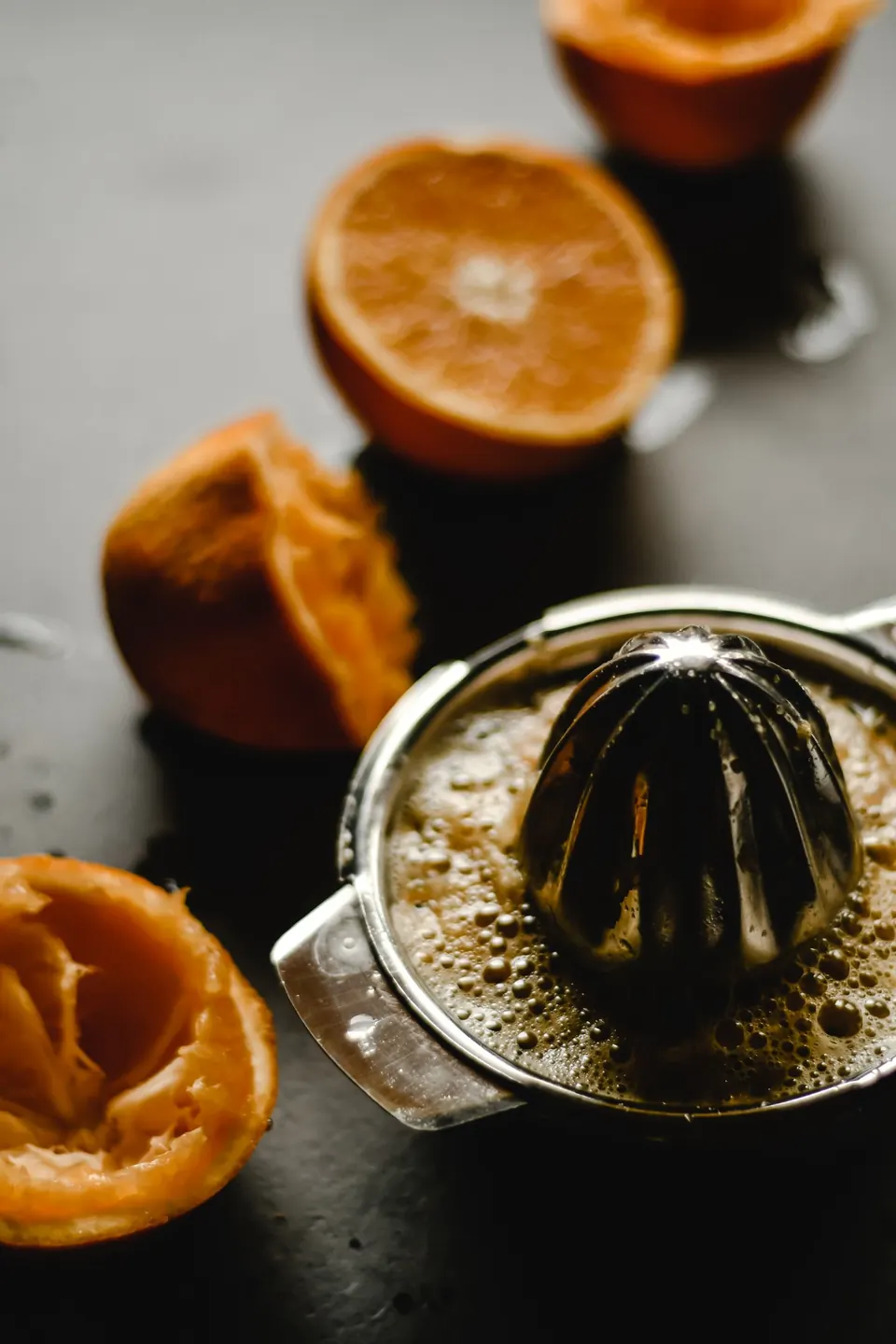
When you juice fruit, most of the fiber leaves with the pulp and peel, and what is left is sugar and water. Fruit you chew takes longer to eat, and its fiber adds bulk in your stomach. That is why a whole orange keeps you fuller than a glass of juice while having fewer calories.
The World Health Organization counts the natural sugar in juice as "free sugars", just like added sugar and honey, and recommends keeping free sugars under 10% of your daily calories, ideally under 5% if you can2. The sugar inside whole fruit is not part of that recommendation, because the WHO found no evidence that it causes harm.
None of this means juice is off limits. A small glass with breakfast is fine; just count it like any drink with calories, and do not treat it as a serving of fruit in place of the real thing.
Fruit calories per cup and per piece
All fruit is good, but not all fruit has the same calories. A cup of watermelon cubes has 46 calories, a cup of strawberries 49 and a kiwi 42, so you can fill a big plate with them for very few calories. On the other end, a cup of mango is 99 calories, a medium banana 105 and a cup of grapes 104.
A cup of grapes has more than twice the calories of a cup of watermelon, even though both cups are the same size, because watermelon is mostly water. Grapes are also easy to eat without counting, one after another, so put your portion in a small bowl instead of eating from the bag.
That does not make mango, grapes or bananas "bad". They all bring fiber and vitamins, and a medium banana has 3.1 g of fiber. The point is to know your portion, not to give up the fruit you love.
Fruit calorie chart by portion
| Food | Calories | Sugarsg | Fiberg |
|---|---|---|---|
| Kiwi1 fruit, 69 gUSDA | 42 | 6.2 | 2.1 |
| Watermelon1 cup, cubed, 152 gUSDA | 46 | 9.4 | 0.6 |
| Strawberries1 cup, halved, 152 gUSDA | 49 | 7.4 | 3 |
| Blueberries1 cup, 148 gUSDA | 84 | 14.7 | 3.6 |
| Mango1 cup, pieces, 165 gUSDA | 99 | 22.6 | 2.6 |
| Grapes1 cup, 151 gUSDA | 104 | 23.4 | 1.4 |
| Banana1 medium, 118 gUSDA | 105 | 14.4 | 3.1 |
Dried fruit such as dates has far more calories for the same weight; see our guide to date calories.
Easy ways to eat more fruit instead of juice
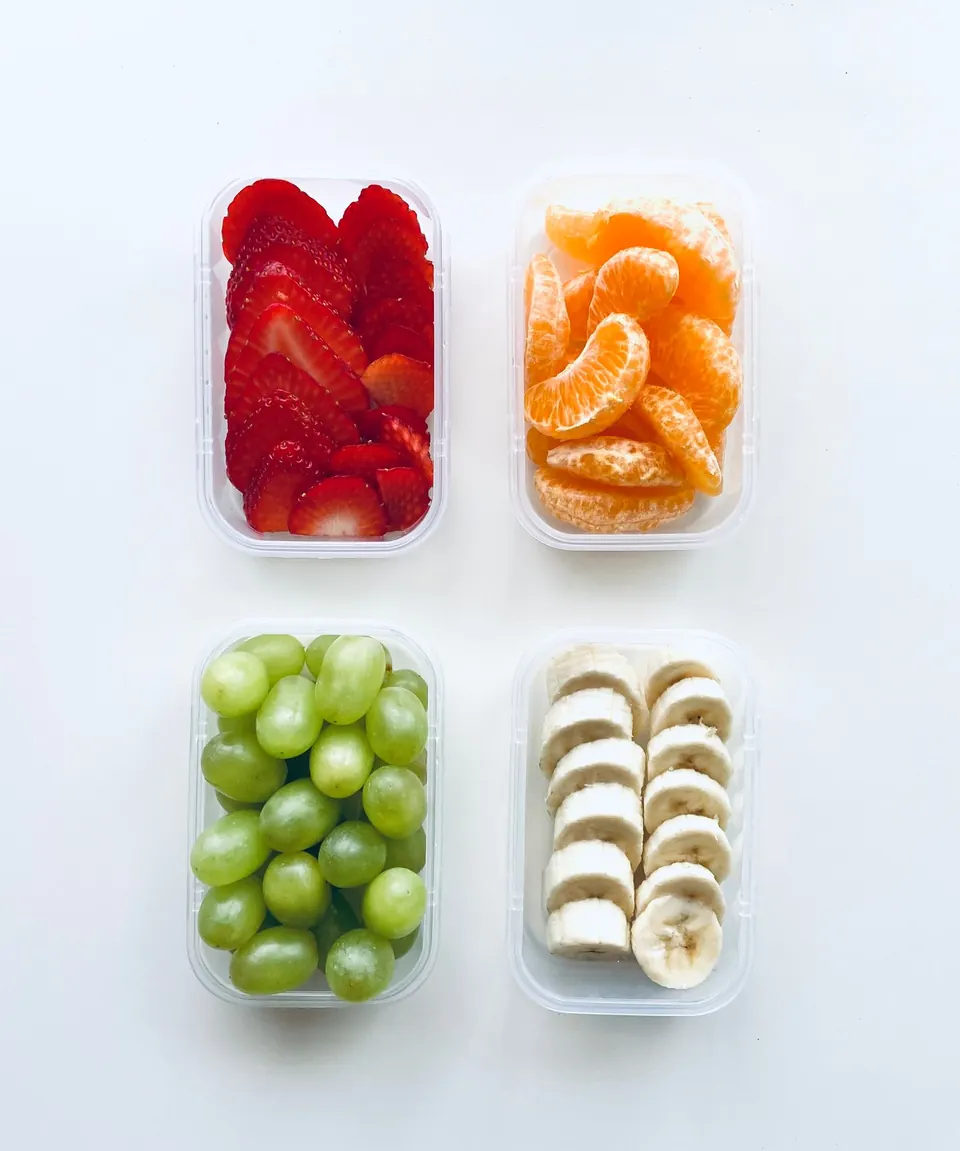
Cut fruit in small tubs
Cut it the night before into small containers; each tub holds about a cup.
Photo: Bora C on Pexels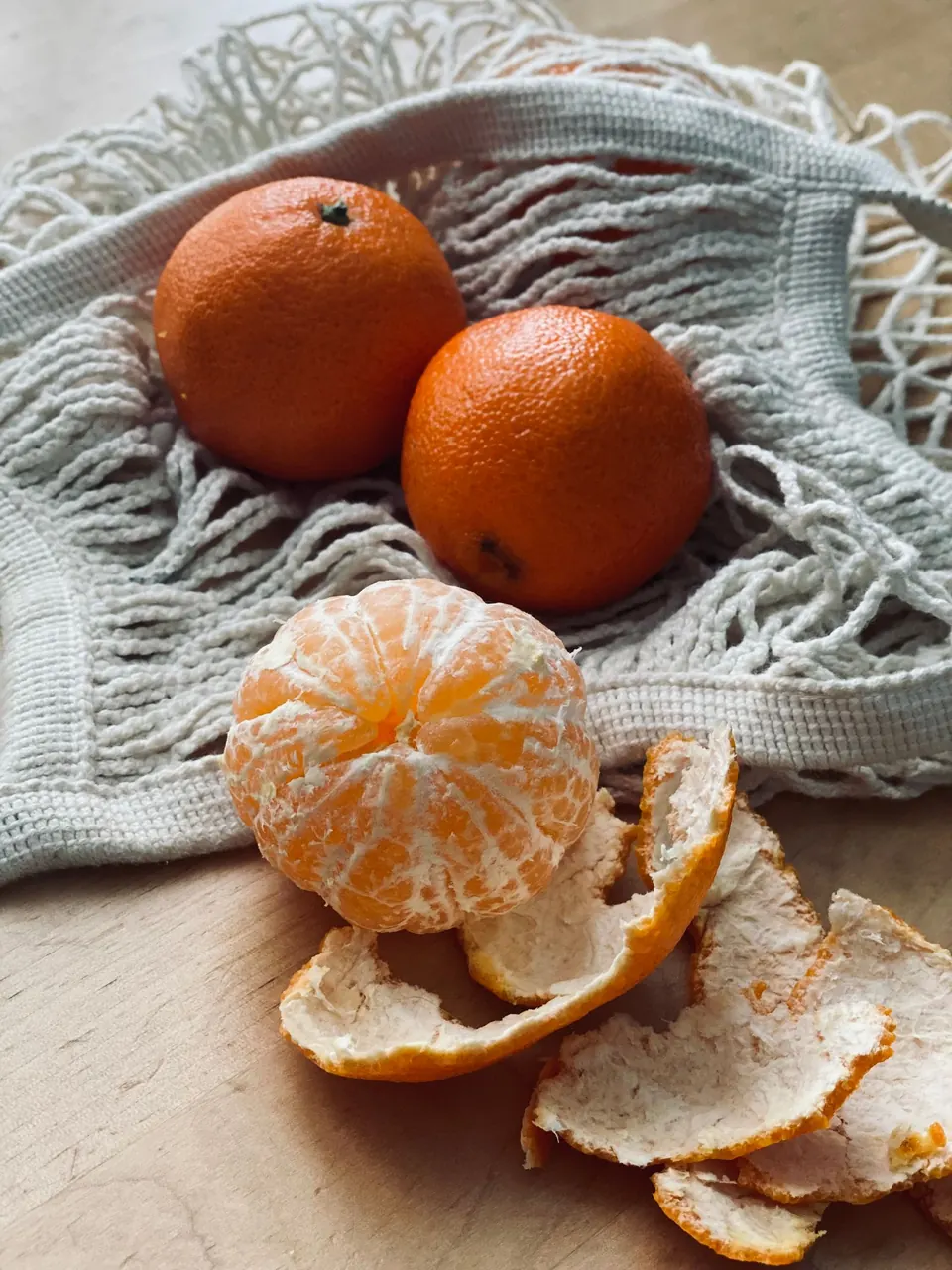
A peeled orange
Peel an orange and keep it in your bag instead of a juice box.
Photo: Xeniya Kovaleva on Pexels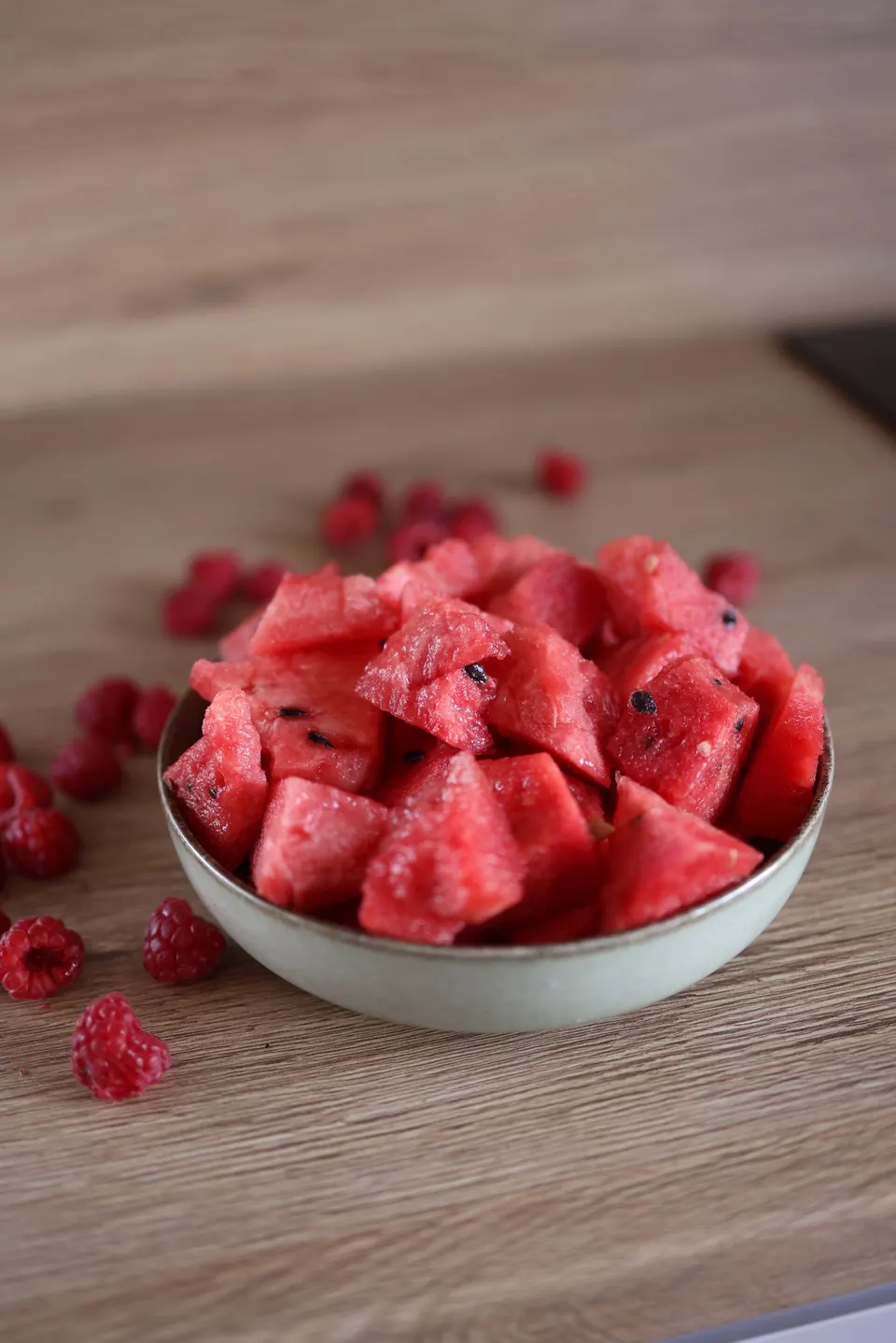
A cold plate of watermelon
When you want something sweet and refreshing, watermelon fills the plate for few calories.
Photo: Valeria Boltneva on Pexels
Smoothies with no added sugar: how to count them
A smoothie beats strained juice because you blend the whole fruit and the fiber stays in. It is still a drink you finish quickly, though, and the calories add up fast once fruit, milk, honey and peanut butter all go into the same glass.
Our rule of thumb: ripe fruit, a liquid with some protein such as milk or yogurt, and that is it. If your banana is ripe or frozen, you do not need honey or sugar. A cup of spinach has only 7 calories, so you can add it without changing the total.
How many calories in a smoothie? Count it by ingredient
| Food | Calories | Proteing | Sugarsg |
|---|---|---|---|
| Banana1 medium, 118 gUSDA | 105 | 1.3 | 14.4 |
| Strawberries1 cup, halved, 152 gUSDA | 49 | 1 | 7.4 |
| Blueberrieshalf a cup, 74 gUSDA | 42 | 0.5 | 7.4 |
| Spinach1 cup, 30 gUSDA | 7 | 0.9 | 0.1 |
| Reduced-fat milk (2%)1 cup, 244 gUSDA | 122 | 8.1 | 12.3 |
| Nonfat Greek yogurt1 container, 170 gUSDA | 100 | 17.3 | 5.5 |
| Honey1 tbsp, 21 gUSDA | 64 | 0.1 | 17.2 |
| White sugar1 tsp, 4.2 gUSDA | 16 | 0 | 4.2 |
Smoothie ideas sweetened by the fruit itself
Each one takes two minutes, and all the sweetness comes from fruit, with no added sugar.
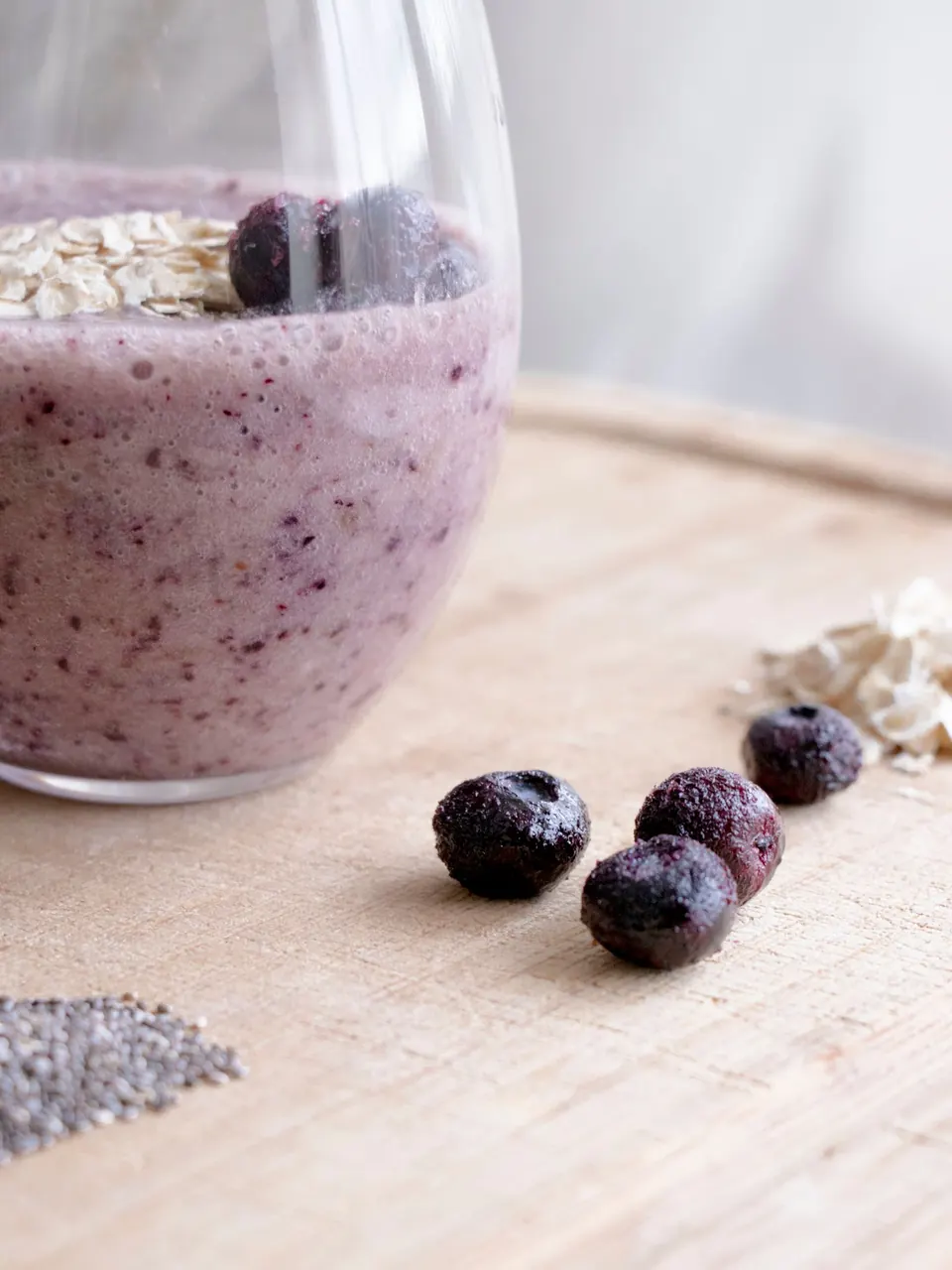
Blueberry smoothie
Half a cup of blueberries with milk and a handful of oats: a gorgeous color and an even better taste.
Photo: Ralitsa Racheva on Pexels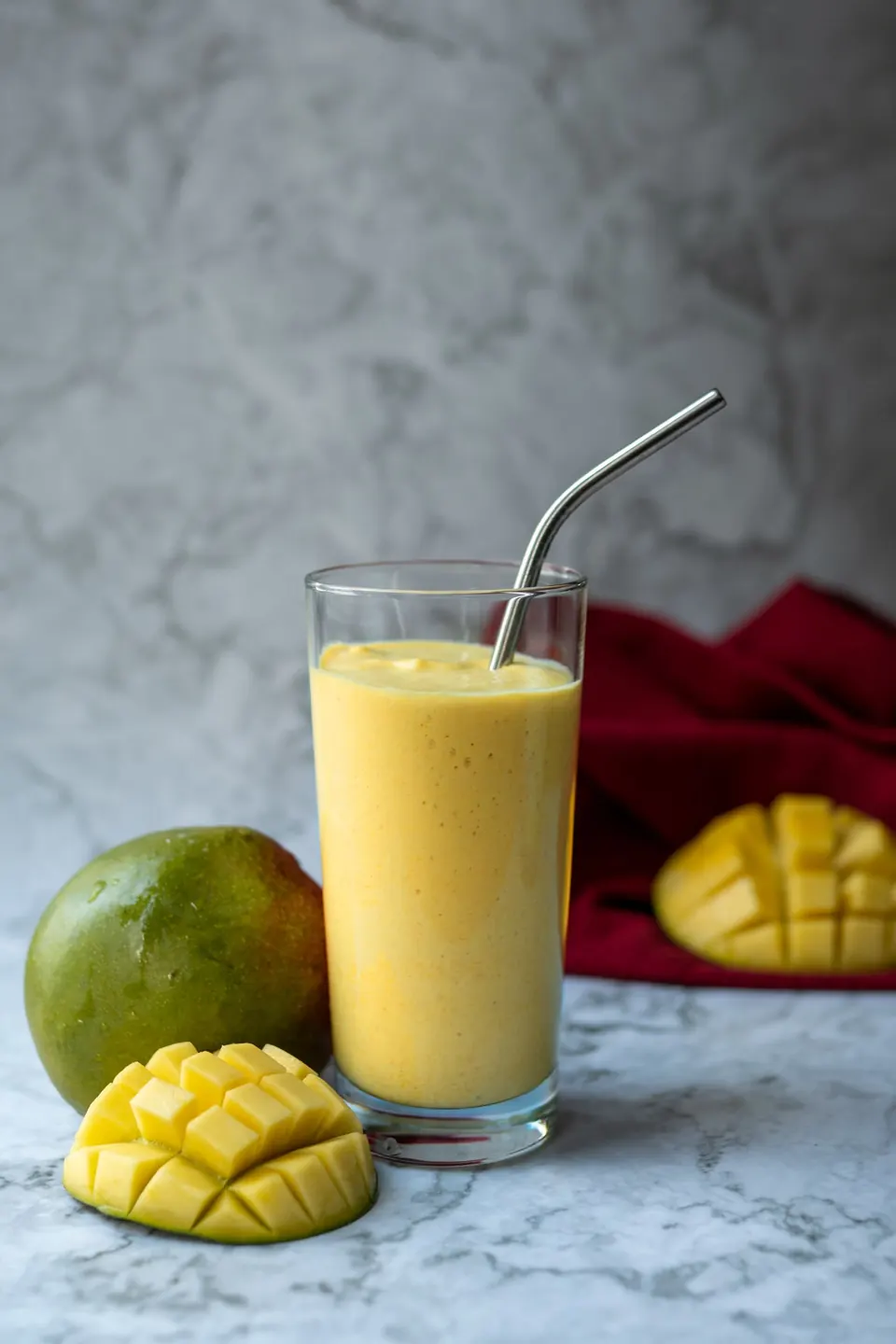
Mango smoothie
Ripe mango is sweet on its own; blend it with yogurt instead of juice.
Photo: Юлия Зяблова on Pexels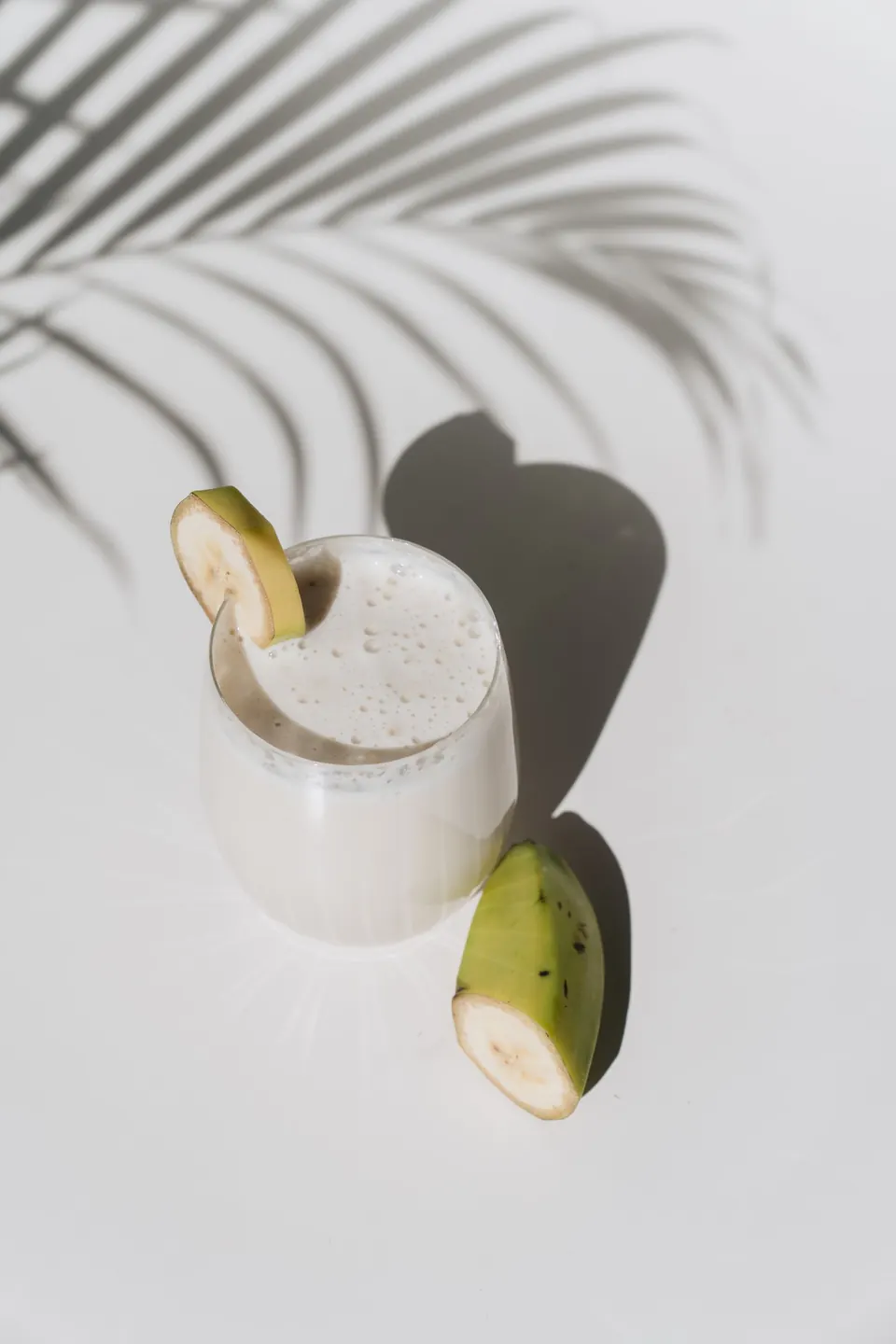
Banana smoothie
Frozen banana gives an ice-cream texture with no sugar.
Photo: alleksana on Pexels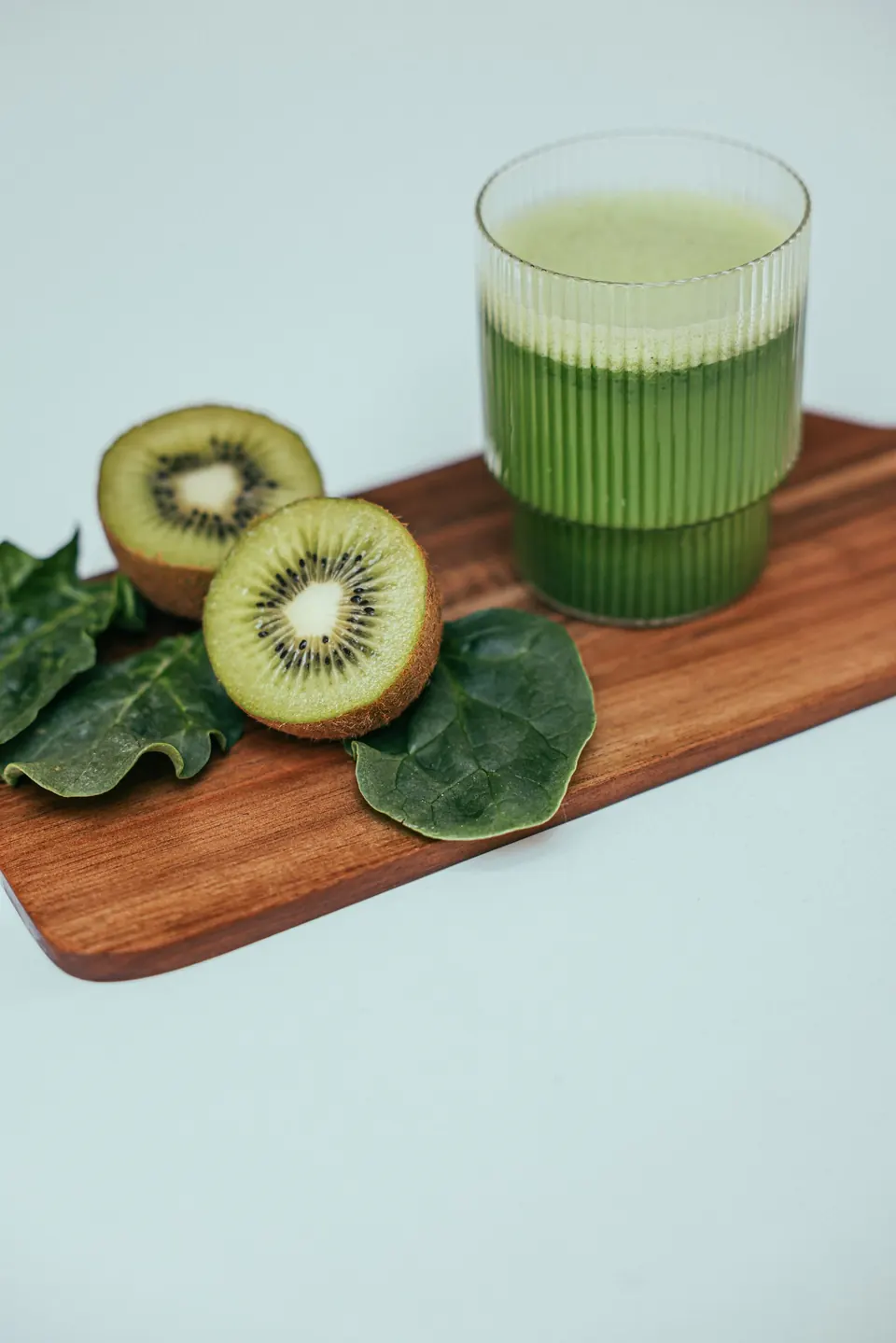
Kiwi and spinach smoothie
Spinach barely changes the taste, and kiwi adds a fresh, tangy edge.
Photo: Cup of Couple on Pexels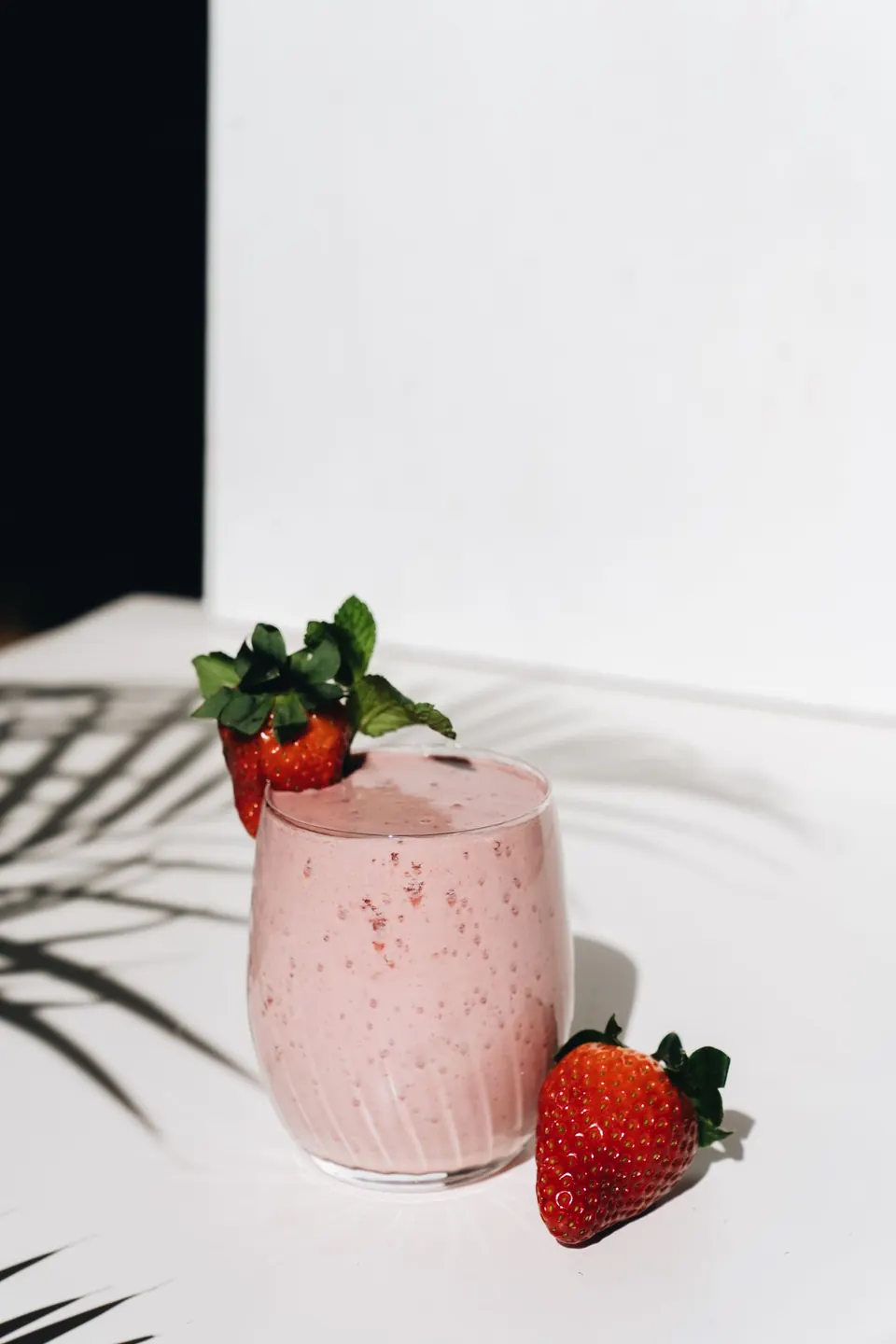
Strawberry smoothie
A cup of strawberries and milk, the lightest one on the list.
Photo: alleksana on Pexels
Make fruit keep you full
- Eat the fruit instead of drinking it, and if you want juice, keep it to a small glass with a meal.
- Read the label: "no added sugar" is not the same as "fruit flavored drink", and the second usually has more sugar.
- Put protein in your smoothie, milk or Greek yogurt, so it becomes a snack and not just a sweet drink.
- A ripe or frozen banana sweetens a smoothie without honey.
- Measure grapes and mango with a cup once, and after that you will know your portion by eye.
Common questions
How many calories in a glass of orange juice?
A cup of fresh orange juice has 112 calories and 20.8 g of sugar, with less than a gram of fiber. A medium orange has 69 calories and 3.1 g of fiber.
Is fresh fruit juice healthy?
It has vitamins from the fruit, but the WHO counts its sugar as free sugars, which it recommends cutting back on. Whole fruit is the better choice because it has fiber and fills you up more.
How many calories in a banana?
A medium banana, 118 g, has 105 calories and 3.1 g of fiber.
What is the lowest calorie fruit?
Of the fruits in our chart, a kiwi has 42 calories, a cup of watermelon 46 and a cup of strawberries 49.
Is a smoothie better than juice?
If you blend the whole fruit, the fiber stays in, which makes it better than strained juice. It is still a drink you finish quickly, so count the ingredients and add some protein.
Sources
- USDA FoodData Central, U.S. Department of Agriculture. Values per 100 g, computed at the portion weight shown:
- Orange juice, raw (Includes foods for USDA's Food Distribution Program) FDC 169098
- Oranges, raw, navels (Includes foods for USDA's Food Distribution Program) FDC 169917
- Apple juice, canned or bottled, unsweetened, without added ascorbic acid FDC 173933
- Apples, raw, with skin (Includes foods for USDA's Food Distribution Program) FDC 171688
- Kiwifruit, green, raw FDC 168153
- Watermelon, raw FDC 167765
- Strawberries, raw FDC 167762
- Blueberries, raw FDC 171711
- Mangos, raw FDC 169910
- Grapes, red or green (European type, such as Thompson seedless), raw FDC 174683
- Bananas, raw FDC 173944
- Spinach, raw FDC 168462
- Milk, reduced fat, fluid, 2% milkfat, with added vitamin A and vitamin D FDC 171267
- Yogurt, Greek, plain, nonfat (Includes foods for USDA's Food Distribution Program) FDC 170894
- Honey FDC 169640
- Sugars, granulated FDC 169655
- Guideline: Sugars intake for adults and children, World Health Organization (2015).
Numbers are computed from USDA per-100 g values at the weight in each table, and rounded. Real food varies by recipe and brand.