Whole Wheat vs White Bread Calories, and Potatoes Baked, Mashed or Fried
Carbs are not the enemy. The real difference is fiber and how you cook them, not the color of the bread.
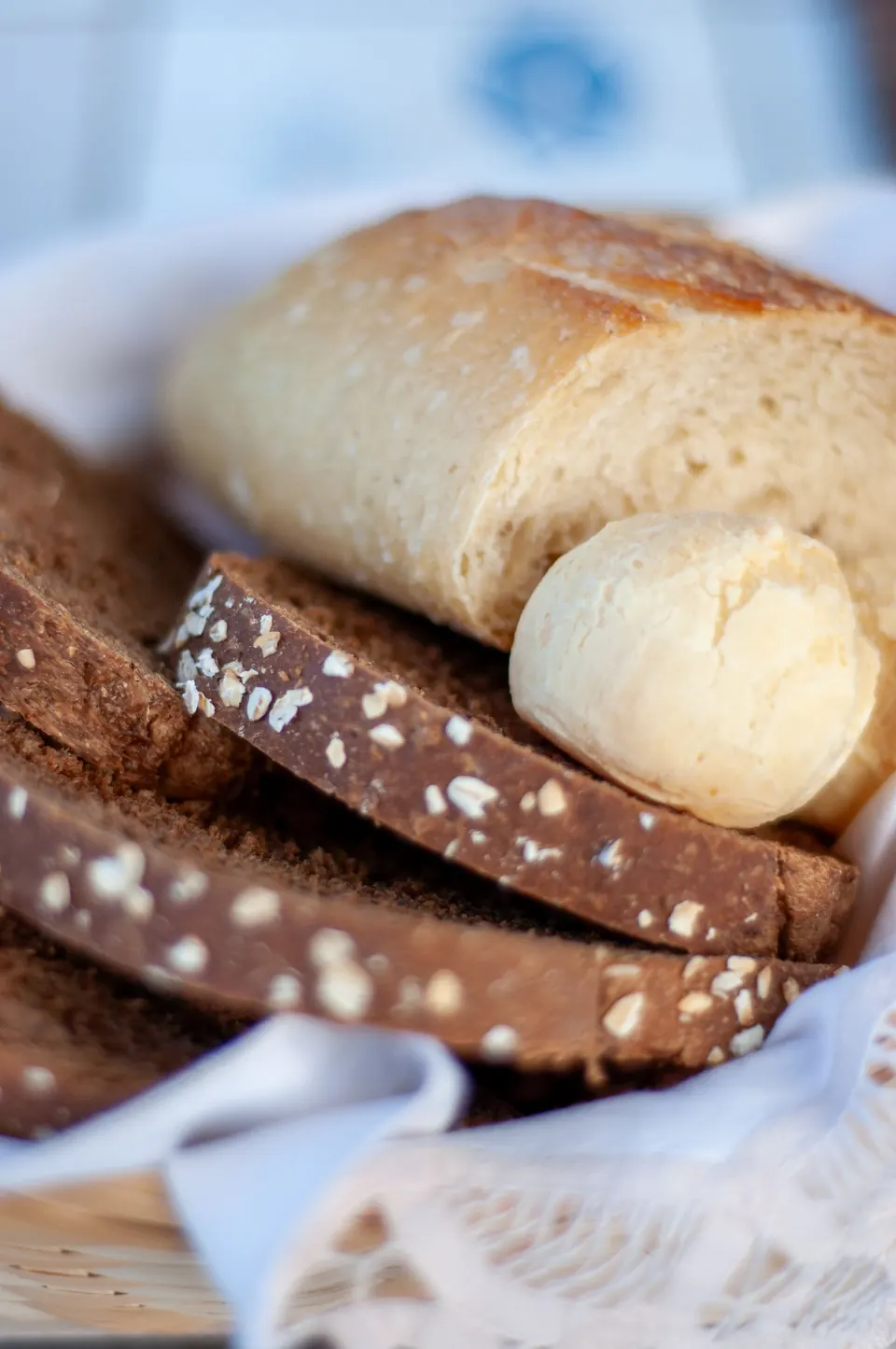
The moment many of us decide to eat lighter, bread, rice and potatoes are the first things to go, or we swap everything white for whole wheat and call it done. The real picture is simpler than that: whole wheat bread, brown rice and whole wheat pasta are very close in calories to the white versions, and potatoes on their own are light. What pushes them up is the oil and the butter.
This guide compares white and whole wheat using US Department of Agriculture (USDA) data, shows how many calories are in baked, mashed and fried potatoes, then gives you salad ideas that genuinely keep you full, not just a few lettuce leaves. The goal is to choose your carbs knowing what the difference really is, not to cut them out of your life.
In this guide 9
- Is whole wheat bread lower in calories than white bread?
- Calories in bread, pasta and rice: white vs whole wheat
- The real difference: fiber and fullness
- How many calories in a potato? Baked, mashed and fried
- Potato calories by cooking method
- Salads that actually fill you up, not just lettuce
- Filling salad ideas
- Calories in filling salad ingredients
- How to eat carbs and feel good about it
Is whole wheat bread lower in calories than white bread?
Per 100 g, white pita (the everyday Arabic flatbread) has 275 calories and whole wheat pita has 262. That is a 13 calorie gap, next to nothing. Rice tells the same story: cooked white rice has 130 calories per 100 g and brown rice has 123. So does pasta: regular cooked pasta has 158 and whole wheat has 149.
Loaf for loaf, whole wheat can even come out higher, because the loaf is heavier. A large white pita weighs about 60 g and has 165 calories, while a large whole wheat pita weighs 64 g and has 168. So if you eat two whole wheat loaves instead of one white one because you assumed it was lighter, your calories went up, not down.
Calories in bread, pasta and rice: white vs whole wheat
| Food | Calories | Carbsg | Fiberg | Proteing |
|---|---|---|---|---|
| White pita bread100 g, 100 gUSDA | 275 | 55.7 | 2.2 | 9.1 |
| Whole wheat pita bread100 g, 100 gUSDA | 262 | 55.9 | 6.1 | 9.8 |
| Regular pasta, cooked100 g, 100 gUSDA | 158 | 30.9 | 1.8 | 5.8 |
| Whole wheat pasta, cooked100 g, 100 gUSDA | 149 | 30.1 | 3.9 | 6 |
| White rice, cooked100 g, 100 gUSDA | 130 | 28.2 | 0.4 | 2.7 |
| Brown rice, cooked100 g, 100 gUSDA | 123 | 25.6 | 1.6 | 2.7 |
| White pita bread1 large loaf, 60 gUSDA | 165 | 33.4 | 1.3 | 5.5 |
| Whole wheat pita bread1 large loaf, 64 gUSDA | 168 | 35.8 | 3.9 | 6.3 |
The calories are close. The column that really changes is fiber.
The real difference: fiber and fullness
If the calories are about the same, why does everyone recommend whole grain? Fiber. Brown rice has 1.6 g of fiber per 100 g against 0.4 g in white rice, four times as much. Whole wheat pita has 6.1 g against 2.2 g in white, nearly three times as much. Whole wheat pasta has 3.9 g against 1.8 g in regular pasta.
Fiber slows you down, helps you feel full sooner and keeps you full for longer, which is why a plate of whole wheat pasta carries you to dinner better than the same amount of white. So go for whole grain, just don't treat it as free. The portion is what counts, and if you want exact numbers for a scoop of rice, you'll find them in the lunch box ideas guide.
How many calories in a potato? Baked, mashed and fried
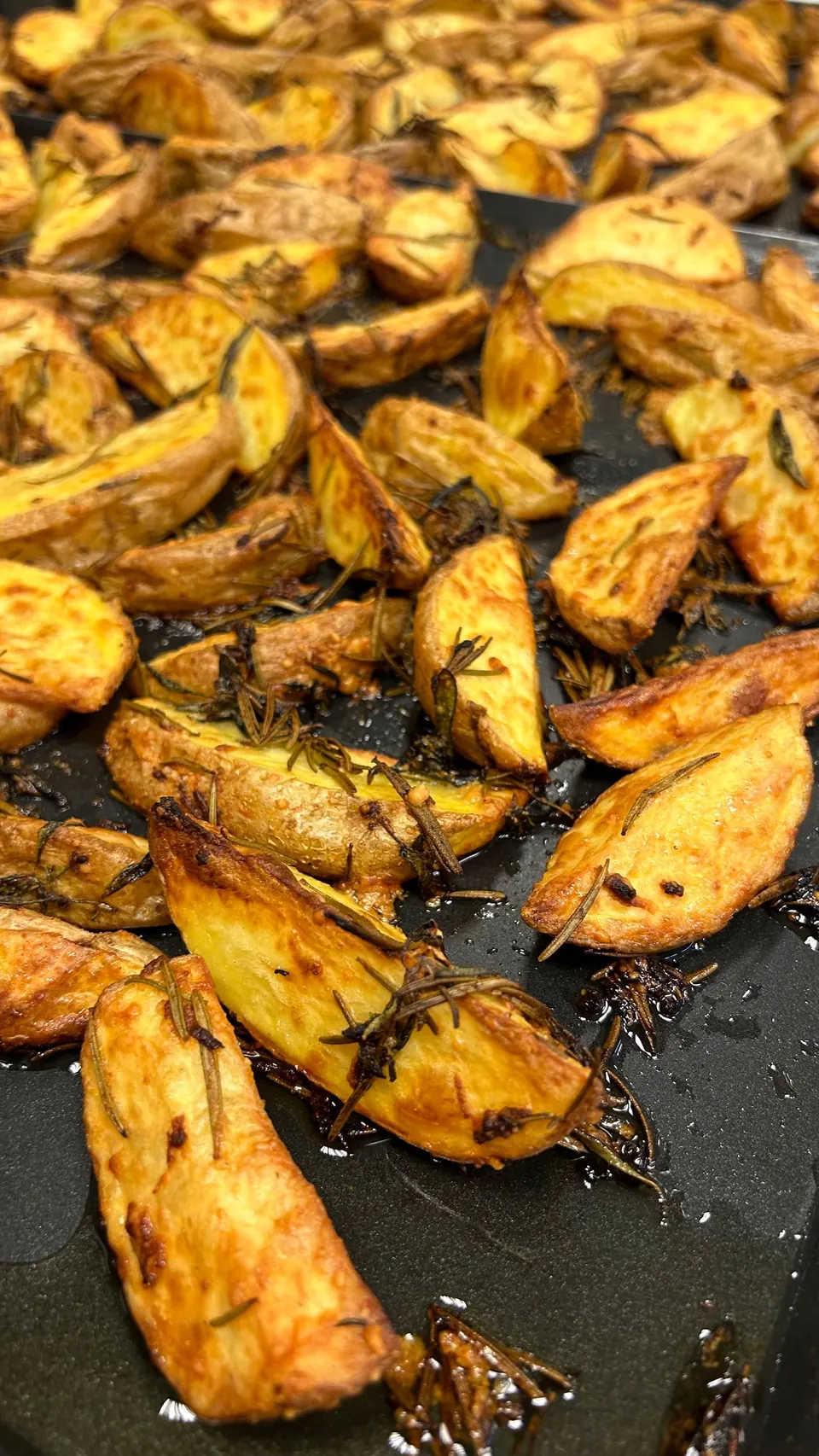
Potatoes have a bad reputation, but on their own they are light: 100 g of baked potato with the skin has just 93 calories, fewer than white rice. A medium baked potato has 161 calories and 3.8 g of fiber, because you eat the skin too.
Mash that same potato with whole milk and butter and a cup comes to 237 calories. Deep-fry it like restaurant fries and it reaches 312 calories per 100 g, more than three times the baked version. A medium order of fries has 365 calories and a large has 480, and the gap between a medium order and a baked potato is 204 calories. The potato didn't change. The oil did.
Potato calories by cooking method
| Food | Calories | Fatg | Carbsg | Fiberg |
|---|---|---|---|---|
| Baked potato with skin1 medium, 173 gUSDA | 161 | 0.2 | 36.7 | 3.8 |
| Mashed potatoes with milk and butter1 cup, 210 gUSDA | 237 | 8.9 | 35.3 | 3.1 |
| French fries (restaurant)small order, 71 gUSDA | 222 | 10.4 | 29.4 | 2.7 |
| French fries (restaurant)medium order, 117 gUSDA | 365 | 17.2 | 48.4 | 4.4 |
| French fries (restaurant)large order, 154 gUSDA | 480 | 22.6 | 63.8 | 5.9 |
| Frozen fries, oven-baked10 fries, 74 gUSDA | 124 | 3.9 | 21.2 | 1.9 |
| Baked sweet potato1 medium, 114 gUSDA | 103 | 0.2 | 23.6 | 3.8 |
| Olive oil1 tbsp, 13.5 gUSDA | 119 | 13.5 | 0 | 0 |
Fat is what drives the number: the baked potato has almost none, while a medium order of fries has 17.2 g.
Salads that actually fill you up, not just lettuce
A salad of lettuce, cucumber and tomato is light, but an hour later you're hungry again and hunting for something else. To turn a salad into a meal it needs three things: protein (chicken, tuna, eggs or chickpeas), a simple carb that gives it substance (quinoa, sweet potato or chickpeas), and a measured amount of fat (avocado or a spoon of oil).
For example, a salad with 100 g of grilled chicken breast, a boiled egg and a tablespoon of olive oil has about 362 calories and 37.3 g of protein. A chickpea and roasted sweet potato salad with a tablespoon of oil has 344 calories and 9.5 g of fiber. The dressing is the trap: one tablespoon of ranch is 64 calories and two tablespoons of olive oil are 239, so keep the dressing on the side and add it by the spoon.
Filling salad ideas
Each one has protein and something with substance. Make it the night before and keep the dressing in its own small container.

Chicken and egg salad
Grilled chicken breast, a boiled egg and romaine lettuce make a complete meal with plenty of protein.
Photo: Sergei Starostin on Pexels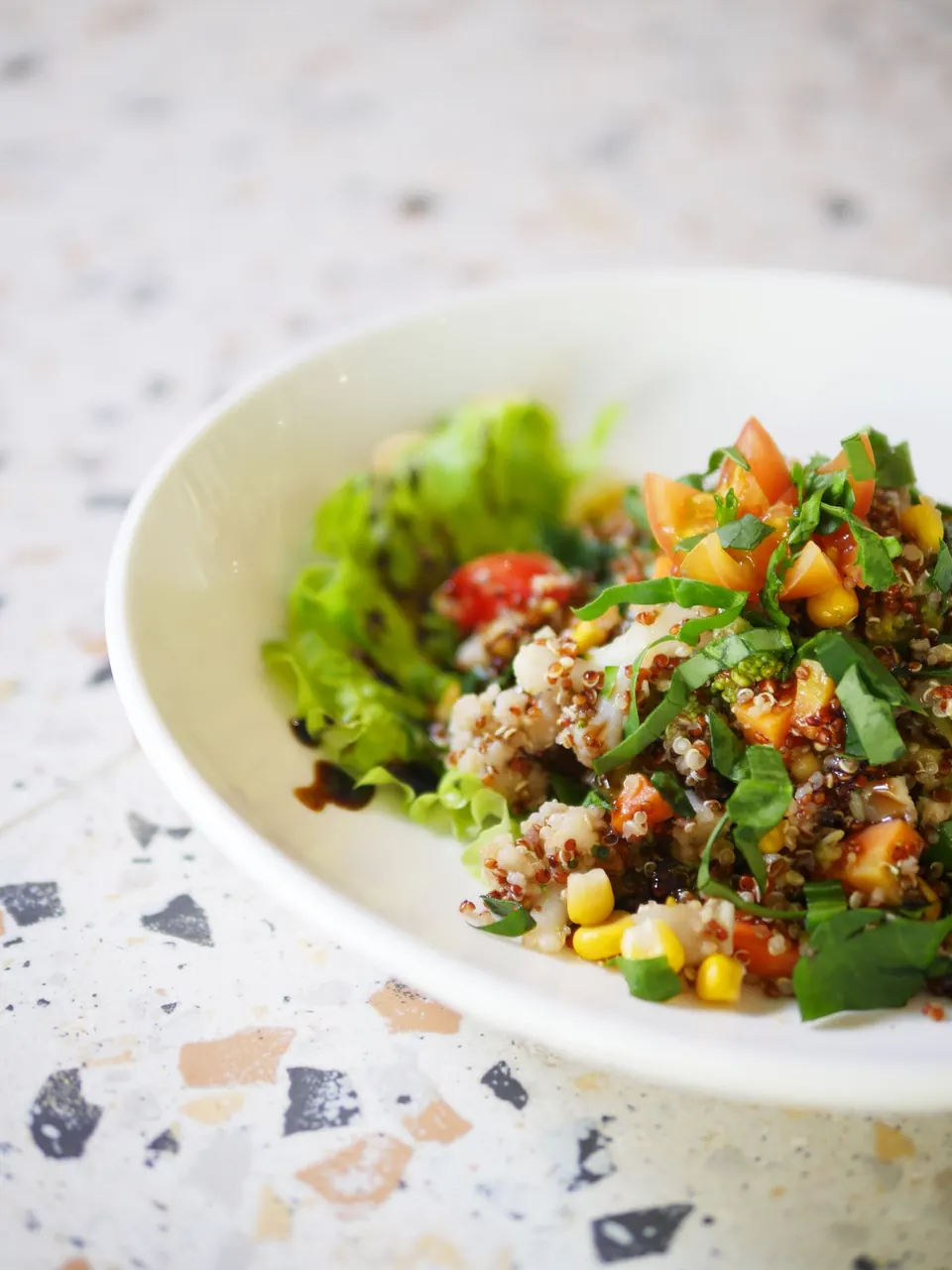
Quinoa and vegetable salad
Quinoa gives the salad body and a little protein, so pile colorful vegetables on top.
Photo: Andi Farruku on Pexels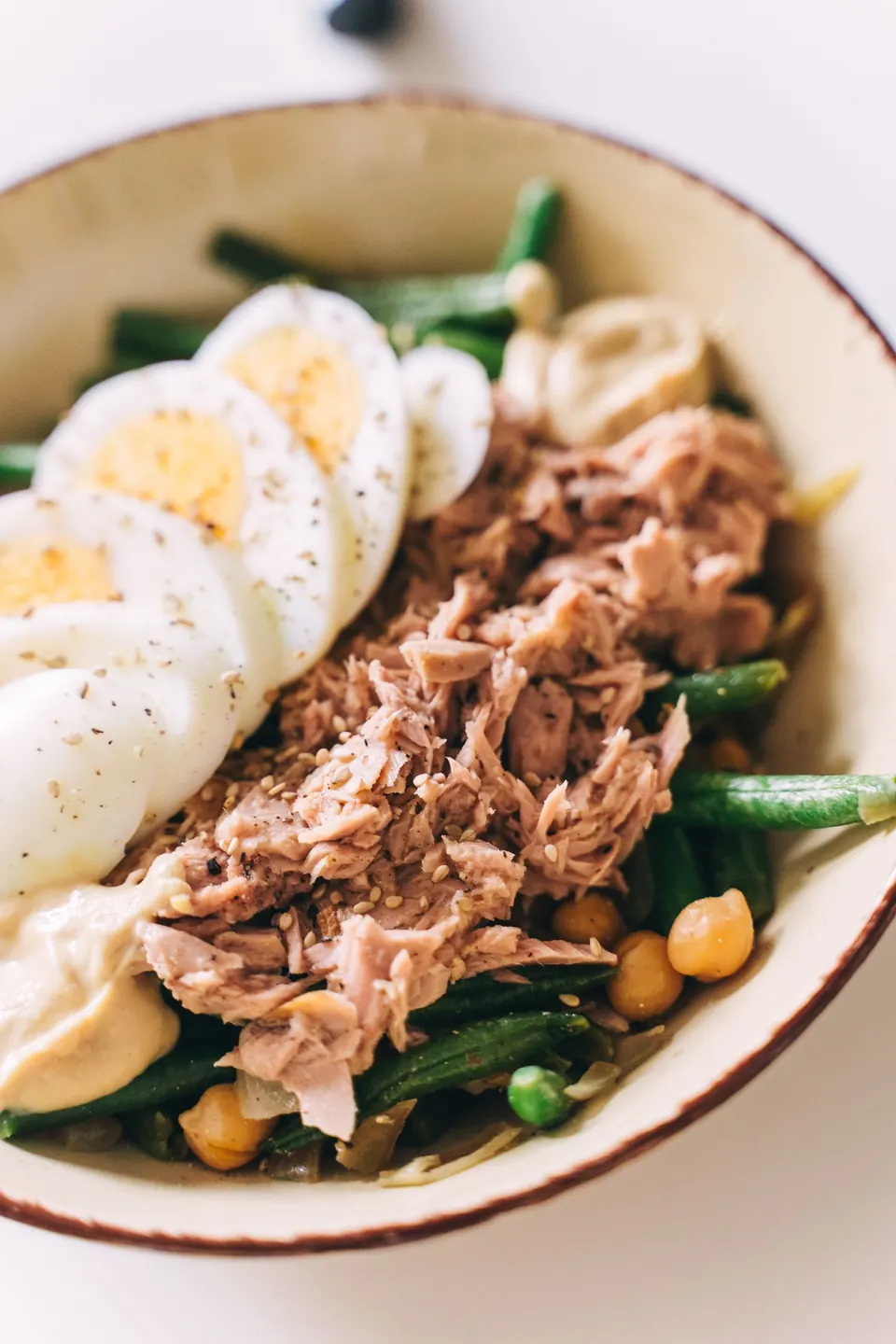
Tuna and egg salad
Drained tuna in water with eggs and green beans is quick and filling.
Photo: Alesia Kozik on Pexels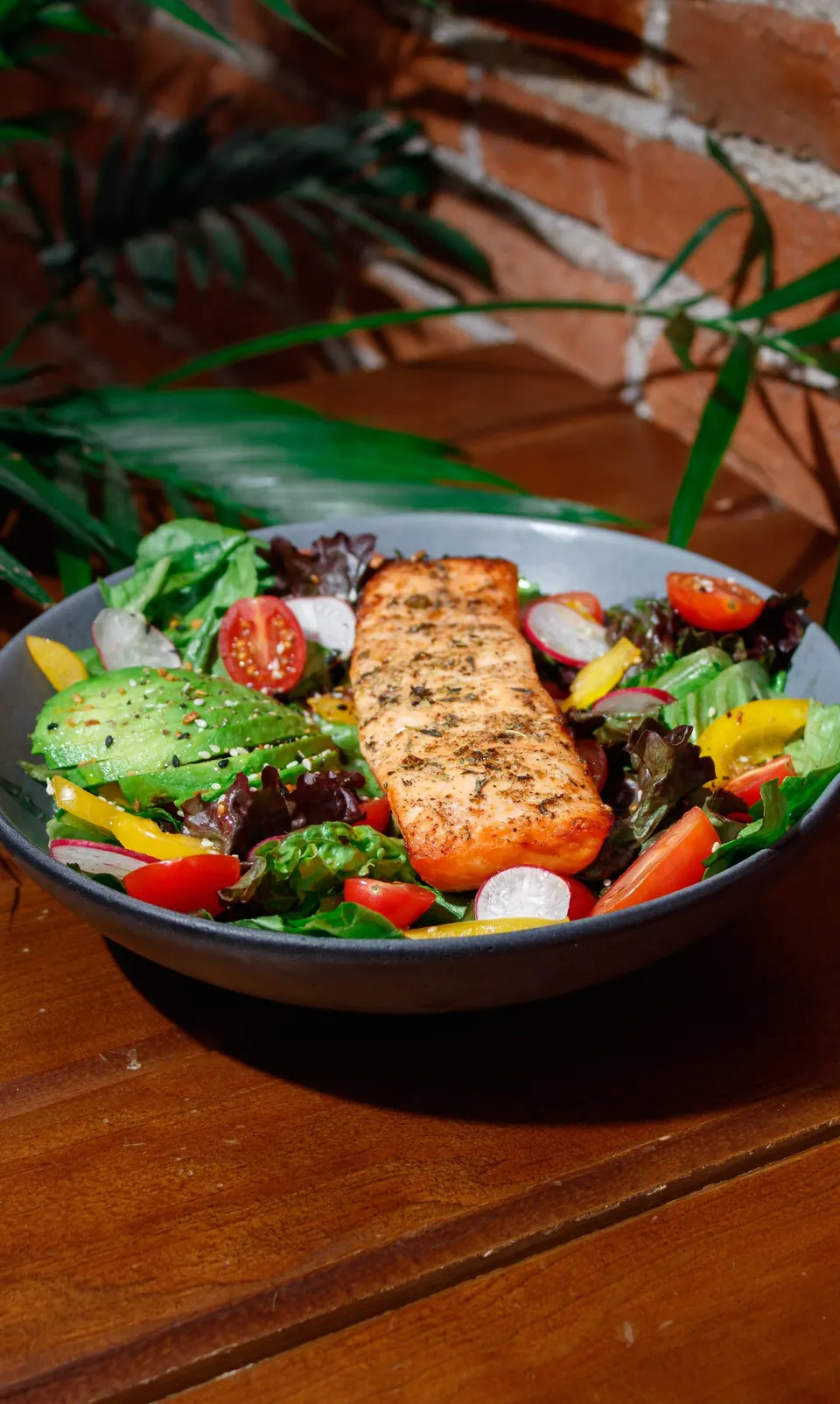
Salmon and avocado salad
A piece of grilled salmon and a quarter of an avocado is plenty, since both bring fat.
Photo: Andrey Castillejos on Pexels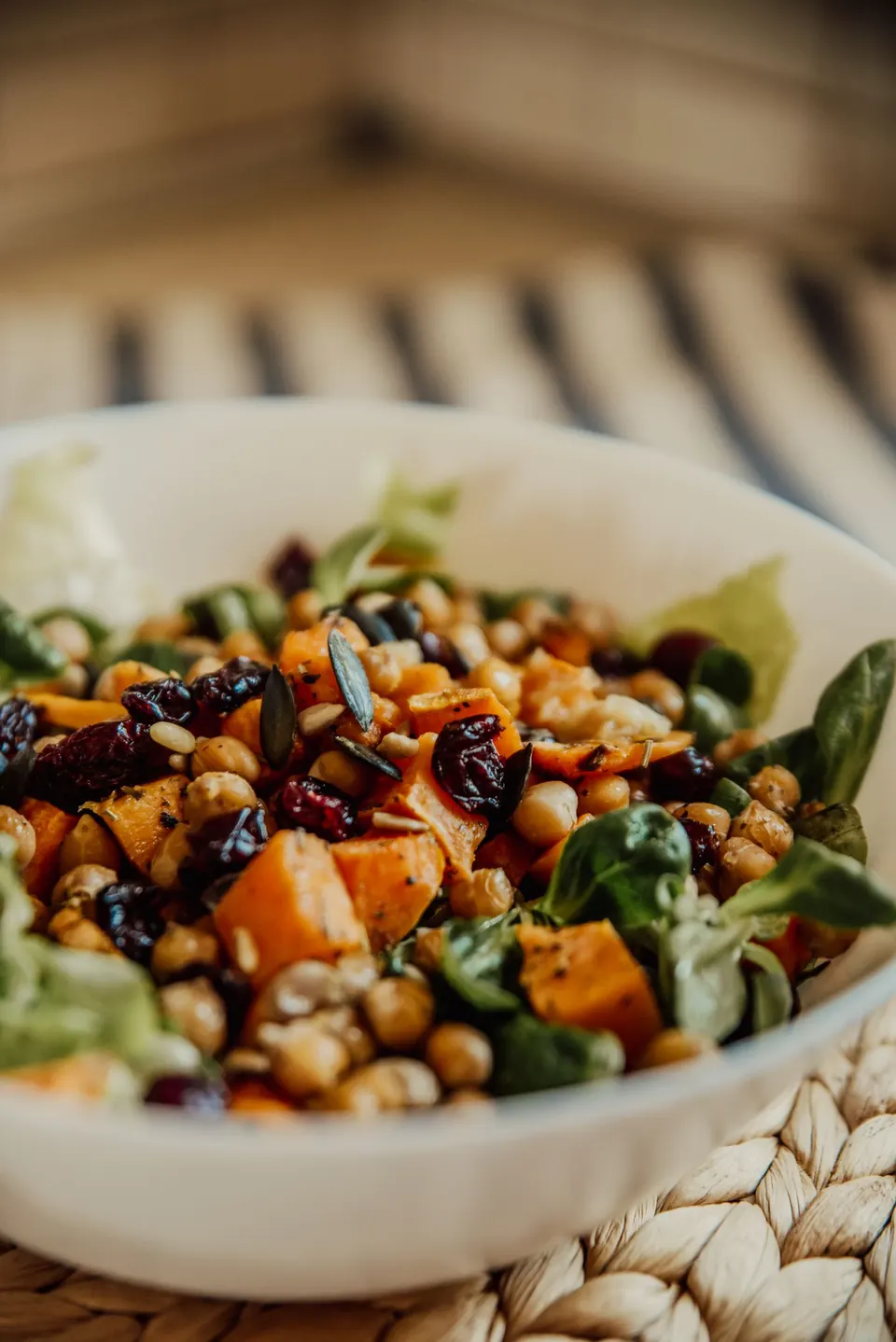
Chickpea and sweet potato salad
Chickpeas and roasted sweet potato give you lots of fiber and long-lasting fullness.
Photo: Alesia Kozik on Pexels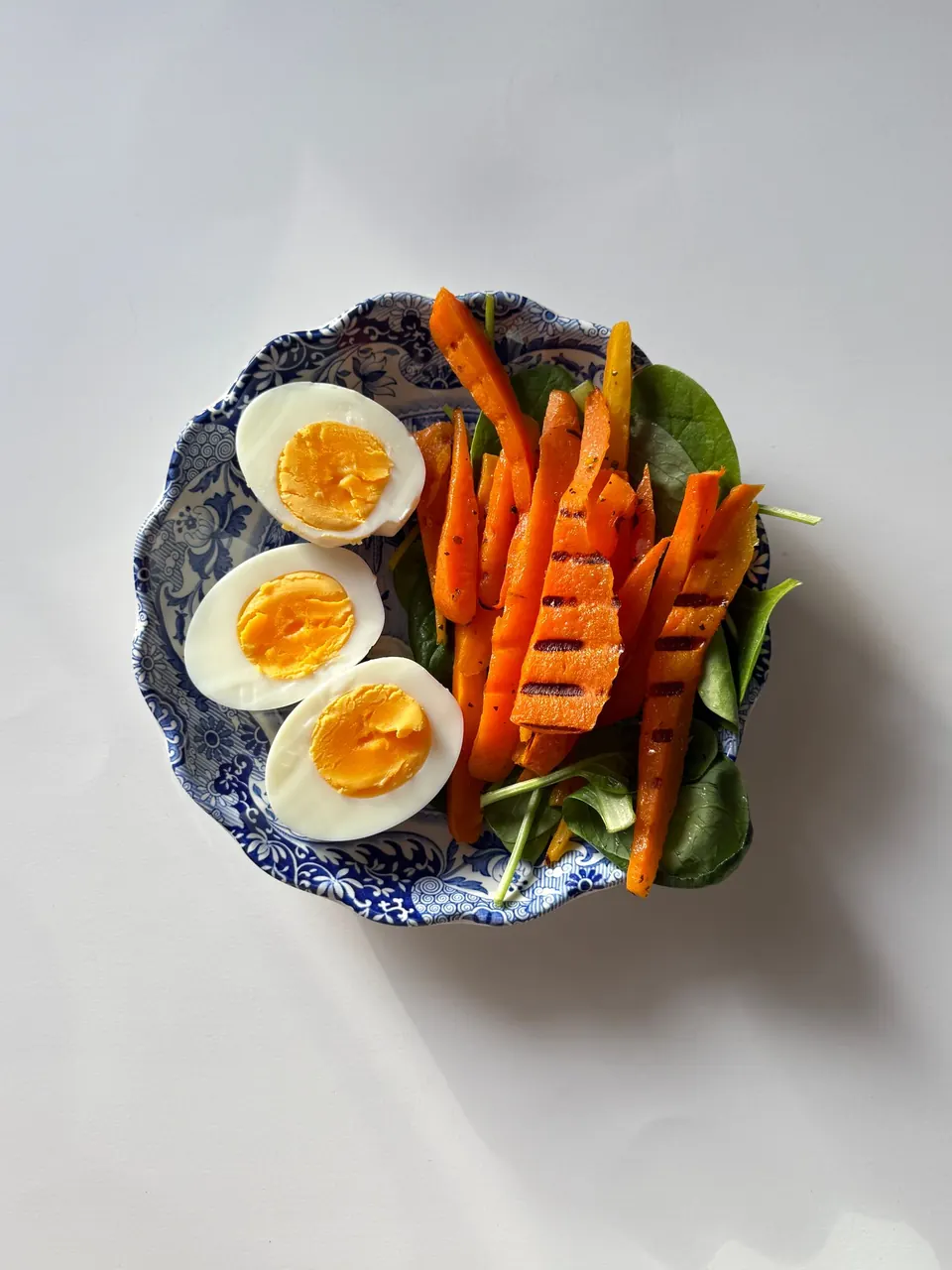
Egg and roasted carrot salad
Boiled eggs with oven-roasted carrots and spinach leaves make a light vegetarian option.
Photo: Vera Rishkevich on Pexels
Calories in filling salad ingredients
| Food | Calories | Proteing | Fiberg |
|---|---|---|---|
| Grilled chicken breast100 g, 100 gUSDA | 165 | 31 | 0 |
| Boiled egg1 large, 50 gUSDA | 78 | 6.3 | 0 |
| Light tuna in water, drainedhalf a can, 85 gUSDA | 99 | 21.7 | 0 |
| Grilled salmon100 g, 100 gUSDA | 206 | 22.1 | 0 |
| Quinoa, cookedhalf cup, 92.5 gUSDA | 111 | 4.1 | 2.6 |
| Chickpeas, boiledhalf cup, 82 gUSDA | 134 | 7.3 | 6.2 |
| Baked sweet potato100 g, 100 gUSDA | 90 | 2 | 3.3 |
| Avocadoquarter fruit, 50 gUSDA | 80 | 1 | 3.4 |
| Ranch dressing1 tbsp, 15 gUSDA | 64 | 0.2 | 0 |
Tuna cans vary by brand, so check the drained weight on the label.
How to eat carbs and feel good about it
- Choose whole wheat and brown rice because they keep you fuller, but measure them exactly like the white versions.
- Bake potatoes in their skins or roast them with a spoon of oil, and save fries for eating out.
- If you mash potatoes, use low-fat milk and less butter, or mash them with yogurt.
- Fill half your plate with vegetables, a quarter with carbs and a quarter with protein.
- In salads, add a protein and a simple carb, and spoon the dressing on instead of pouring it.
Common questions
How many calories in whole wheat pita bread?
Whole wheat pita has 262 calories per 100 g, and a large loaf (about 64 g) has 168. Its advantage over white bread is fiber, not calories.
Is whole wheat pasta lower in calories than regular pasta?
Only slightly. Per 100 g cooked, regular pasta has 158 calories and whole wheat has 149, but whole wheat has 3.9 g of fiber against 1.8 g, which is why it fills you up more.
How many calories in a baked potato?
A medium baked potato with the skin has 161 calories. Any butter, cheese or sauce on top counts separately.
How many calories in french fries?
A medium order of restaurant fries has 365 calories, a small has 222 and a large has 480.
Do potatoes make you gain weight?
No single food does that on its own. Baked potato has 93 calories per 100 g, fewer than white rice, but frying and butter push it up a lot.
Sources
- USDA FoodData Central, U.S. Department of Agriculture. Values per 100 g, computed at the portion weight shown:
- Bread, pita, white, enriched FDC 174915
- Bread, pita, whole-wheat FDC 174916
- Pasta, cooked, enriched, without added salt FDC 169737
- Pasta, whole-wheat, cooked (Includes foods for USDA's Food Distribution Program) FDC 168910
- Rice, white, long-grain, regular, enriched, cooked FDC 168878
- Rice, brown, long-grain, cooked (Includes foods for USDA's Food Distribution Program) FDC 169704
- Potatoes, baked, flesh and skin, without salt FDC 170093
- Potatoes, mashed, home-prepared, whole milk and butter added FDC 168555
- Fast foods, potato, french fried in vegetable oil FDC 170698
- Potatoes, french fried, all types, salt not added in processing, frozen, oven-heated FDC 170118
- Sweet potato, cooked, baked in skin, flesh, without salt FDC 168483
- Oil, olive, salad or cooking FDC 171413
- Chicken, broilers or fryers, breast, meat only, cooked, roasted FDC 171477
- Egg, whole, cooked, hard-boiled FDC 173424
- Fish, tuna, light, canned in water, without salt, drained solids FDC 171986
- Fish, salmon, Atlantic, farmed, cooked, dry heat FDC 175168
- Quinoa, cooked FDC 168917
- Chickpeas (garbanzo beans, bengal gram), mature seeds, cooked, boiled, without salt FDC 173757
- Avocados, raw, all commercial varieties FDC 171705
- Salad dressing, ranch dressing, regular FDC 173592
Numbers are computed from USDA per-100 g values at the weight in each table, and rounded. Real food varies by recipe and brand.