Healthy Lunch Box Ideas for Work and College, with Calories
A healthy lunch doesn't have to be boring. Learn the numbers for your rice and chicken once, then mix it up however you like.
Most of us know a packed lunch is cheaper and lighter than ordering in. The catch is that we fill the box by eye. Rice is usually the biggest part of lunch, chicken is the protein we come back to every day, and the gap between one scoop and the next, or between grilled and fried chicken, is a lot bigger than you'd expect.
This guide pulls together the numbers for rice and chicken from the US Department of Agriculture (USDA) food database, along with lunch box, bowl and sandwich ideas you can prep the night before that keep you full until mid-afternoon. The point isn't to weigh every bite. It's to learn your scoop's number once, then build your box without stressing about it.
In this guide 8
How many calories in a scoop of rice?
100 g of cooked white rice has 130 calories. That sounds harmless, but nobody eats 100 g. One cup of cooked rice weighs about 158 g, which is 205 calories, and most lunch plates hold more than a cup.
A small plate (150 g) gives you 195 calories, a medium plate (300 g) 390, and a large plate (450 g) reaches 585 calories from the rice alone, before any oil, ghee or sauce. A single tablespoon of olive oil adds another 119.
Rice calories by portion
| Food | Calories | Proteing | Carbsg | Fiberg |
|---|---|---|---|---|
| Cooked white rice100 g, 100 gUSDA | 130 | 2.7 | 28.2 | 0.4 |
| Cooked white rice1 cup, 158 gUSDA | 205 | 4.3 | 44.6 | 0.6 |
| Cooked white riceSmall plate, 150 gUSDA | 195 | 4 | 42.3 | 0.6 |
| Cooked white riceMedium plate, 300 gUSDA | 390 | 8.1 | 84.6 | 1.2 |
| Cooked white riceLarge plate, 450 gUSDA | 585 | 12.1 | 126.9 | 1.8 |
| Cooked brown rice1 cup, 202 gUSDA | 248 | 5.5 | 51.7 | 3.2 |
| Olive oil1 tbsp, 13.5 gUSDA | 119 | 0 | 0 | 0 |
Brown rice has more fiber, but cup for cup its calories are close to white. The real difference is how much you scoop.
Chicken breast calories: grilled vs fried
Skinless roasted chicken breast has 165 calories and 31 g of protein per 100 g, one of the leanest high-protein foods there is. The same breast roasted with the skin on is 197 calories, flour-fried is 222, and batter-fried, like broast (the pressure-fried chicken sold all over Saudi Arabia), is 260 calories, while its protein drops to 24.8 g.
So the extra calories come from the skin, the coating and the frying oil, not from the chicken itself. Taking the skin off saves you 32 calories per 100 g. On a normal 150 g lunch portion, that's 248 calories for skinless roasted chicken versus 390 for batter-fried.
Chicken breast calories by cooking method
| Food | Calories | Proteing | Fatg |
|---|---|---|---|
| Roasted, skinless1 portion, 150 gUSDA | 248 | 46.5 | 5.4 |
| Roasted, with skin1 portion, 150 gUSDA | 296 | 44.7 | 11.7 |
| Flour-fried1 portion, 150 gUSDA | 333 | 47.7 | 13.3 |
| Batter-fried (broast)1 portion, 150 gUSDA | 390 | 37.2 | 19.8 |
| Roasted thigh, skinless1 thigh, 116 gUSDA | 208 | 28.8 | 9.5 |
Thigh meat is juicier and more flavorful, and without the skin it's still a good lunch box pick.
Lunch box ideas you won't get bored of
The simple rule: a carb portion you know, a protein, and vegetables to fill the rest of the box. These ideas from our posts can be made the night before and kept in the fridge.
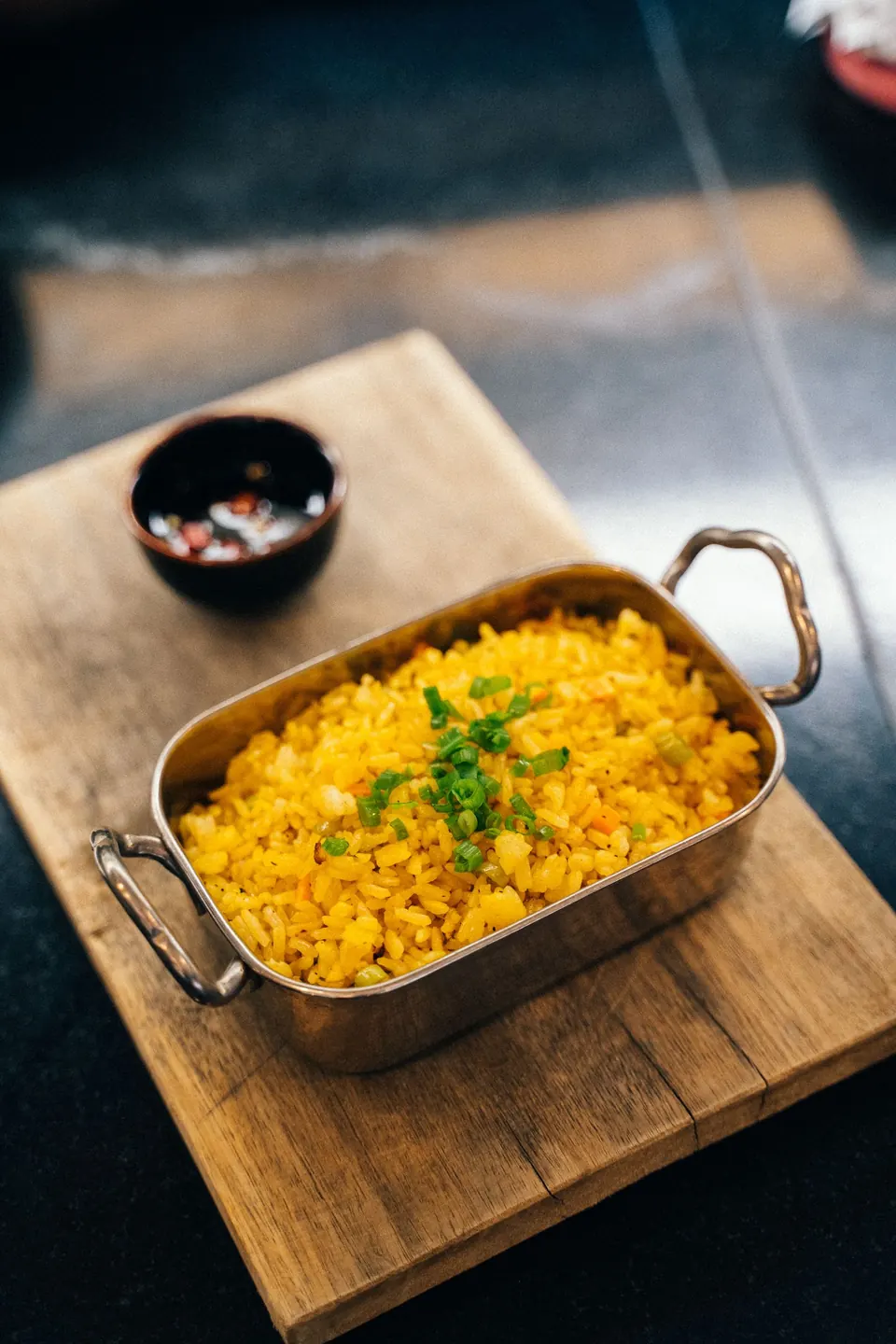
Yellow rice with vegetables
One scoop of rice with sautéed vegetables, and grilled chicken on the side if you like.
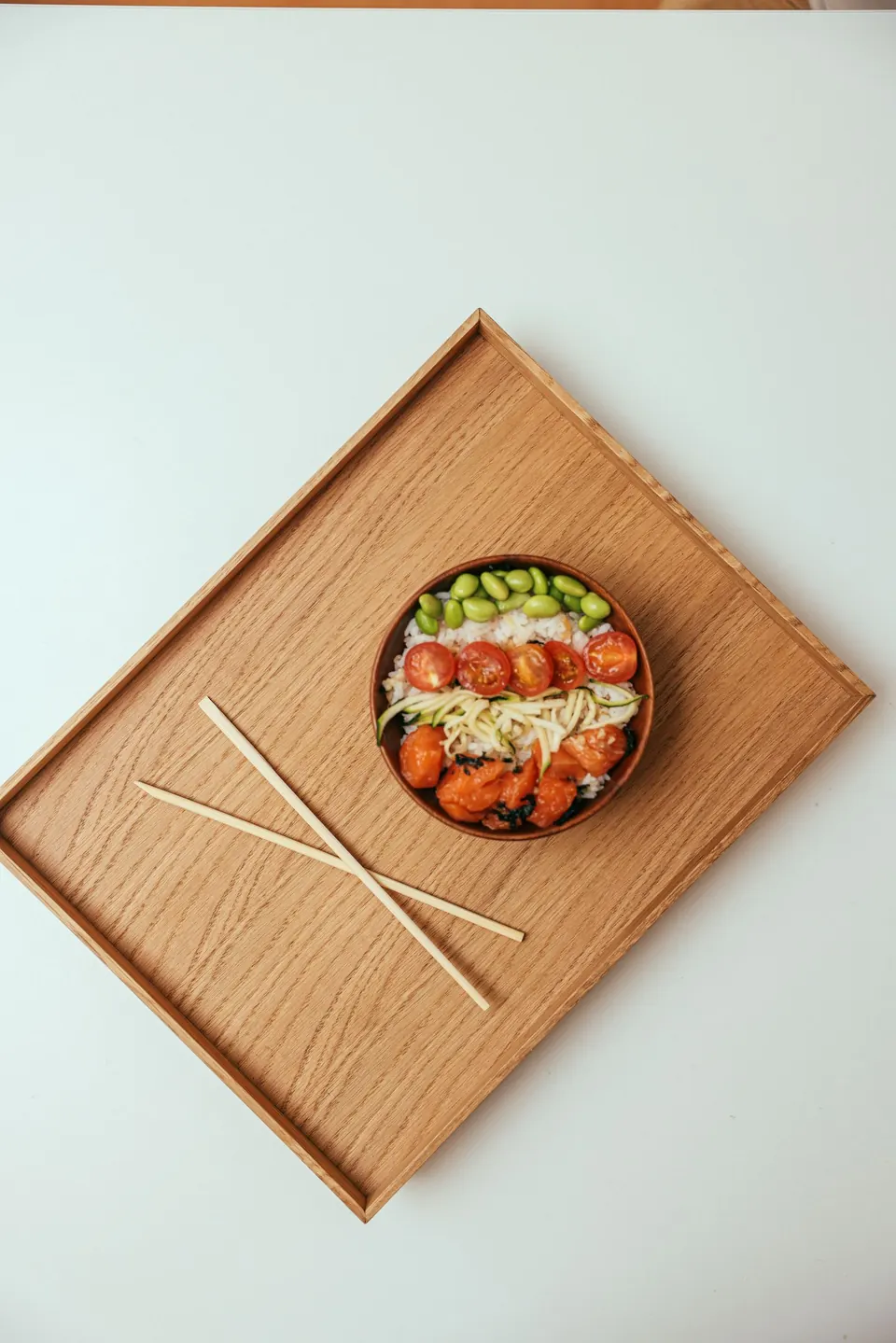
Photo: Anna Tarazevich on PexelsRice, salmon and edamame
Salmon brings healthy fats and protein, and edamame adds even more protein.
Photo: Cup of Couple on Pexels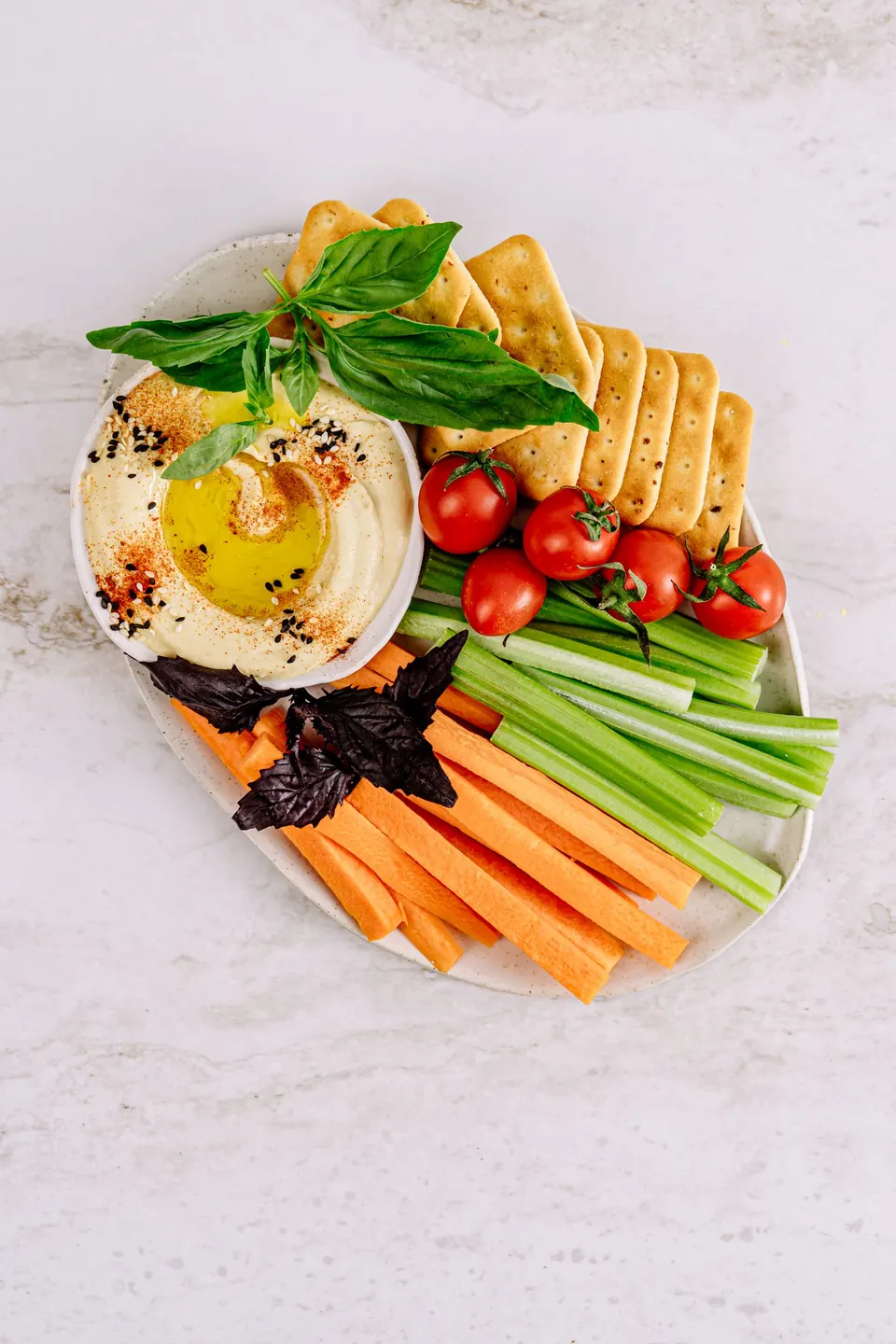
Hummus, veggies and crackers
A light plant-based option for days when you don't want a heavy lunch.
Photo: Antoni Shkraba on Pexels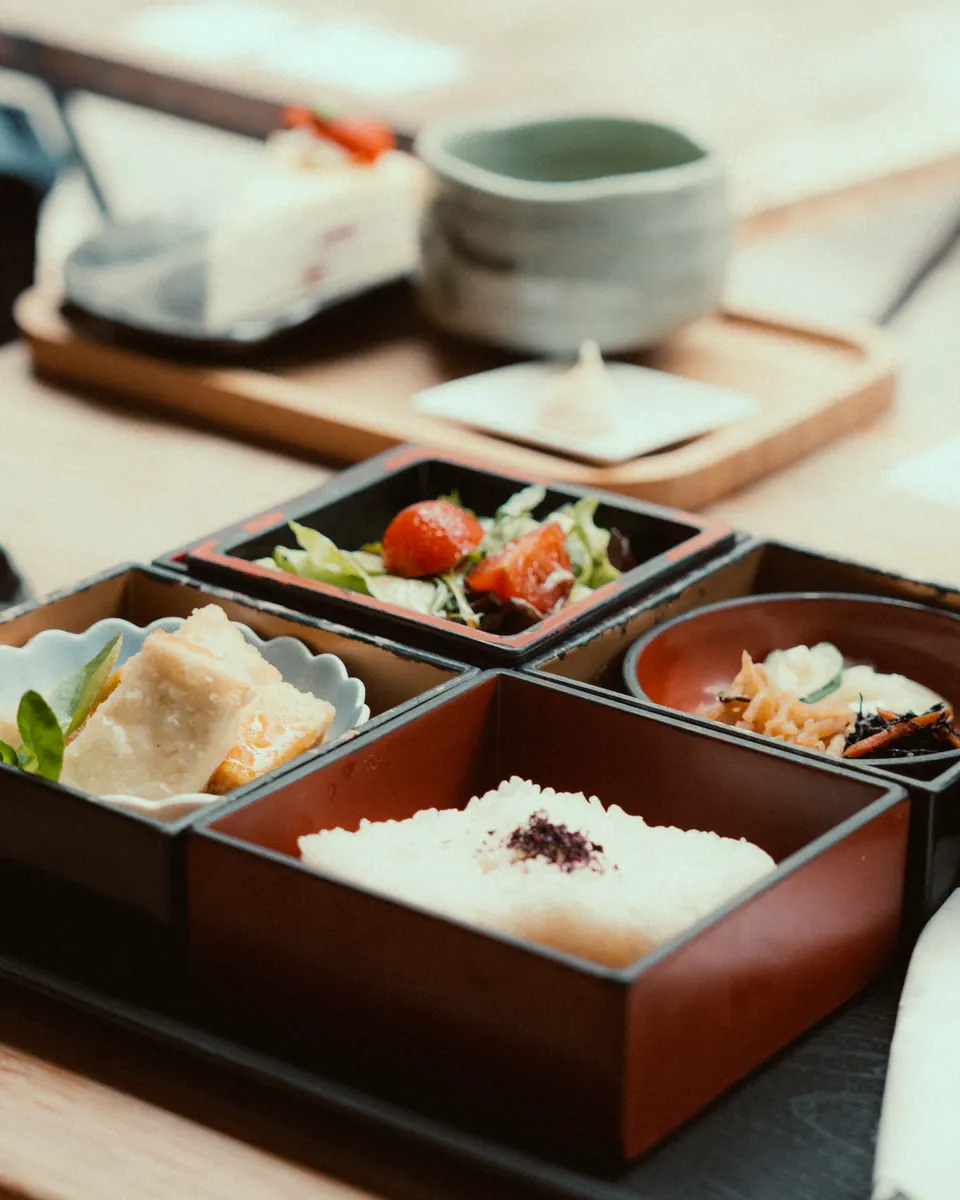
Rice and salad bento
Divide the box: a quarter rice, a quarter protein and half salad.
Photo: Anh Nguyen on Pexels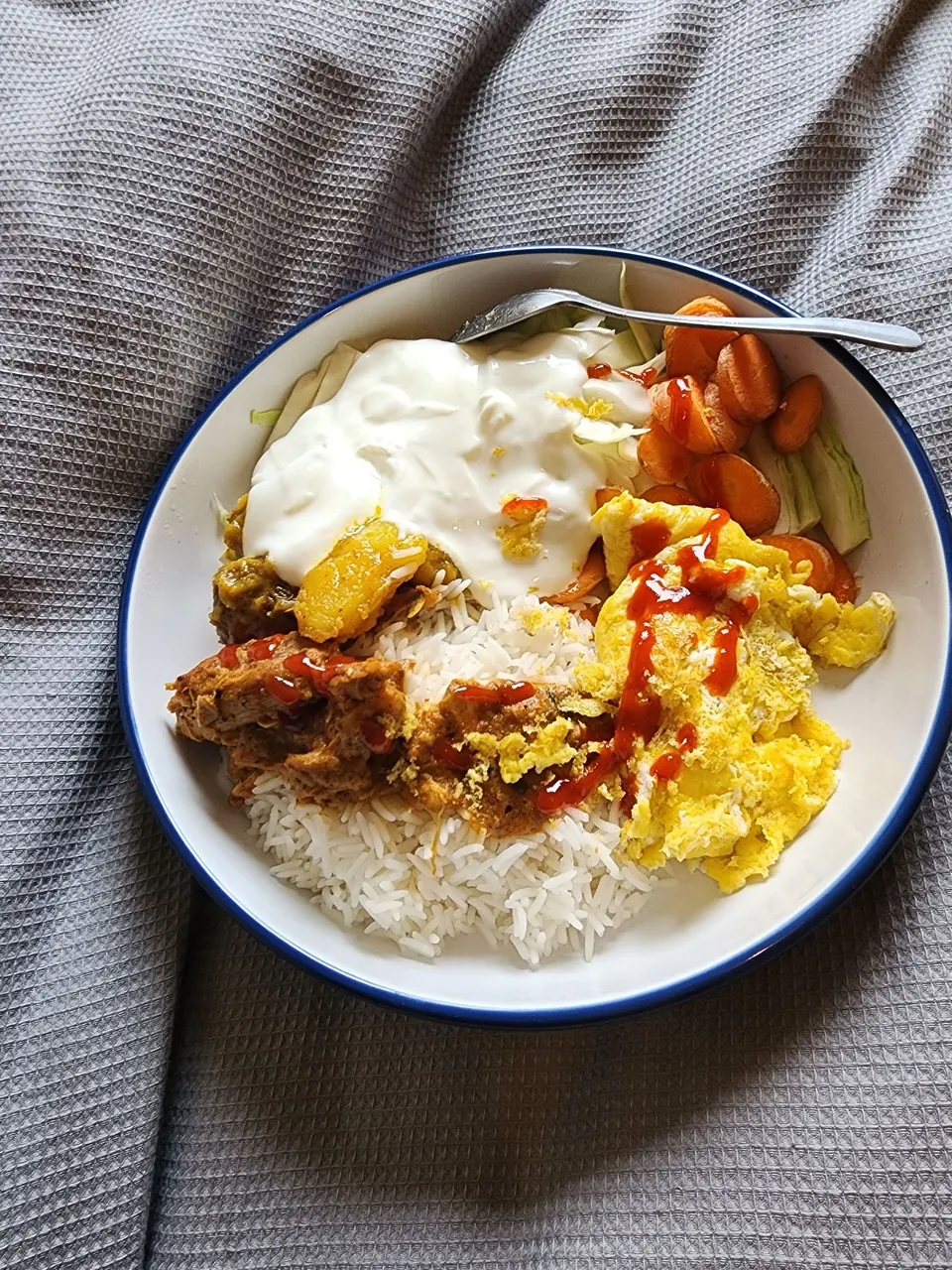
Rice, chicken and yogurt bowl
Yogurt instead of sauce gives the same creaminess with fewer calories.
Photo: The Narrative lens on Pexels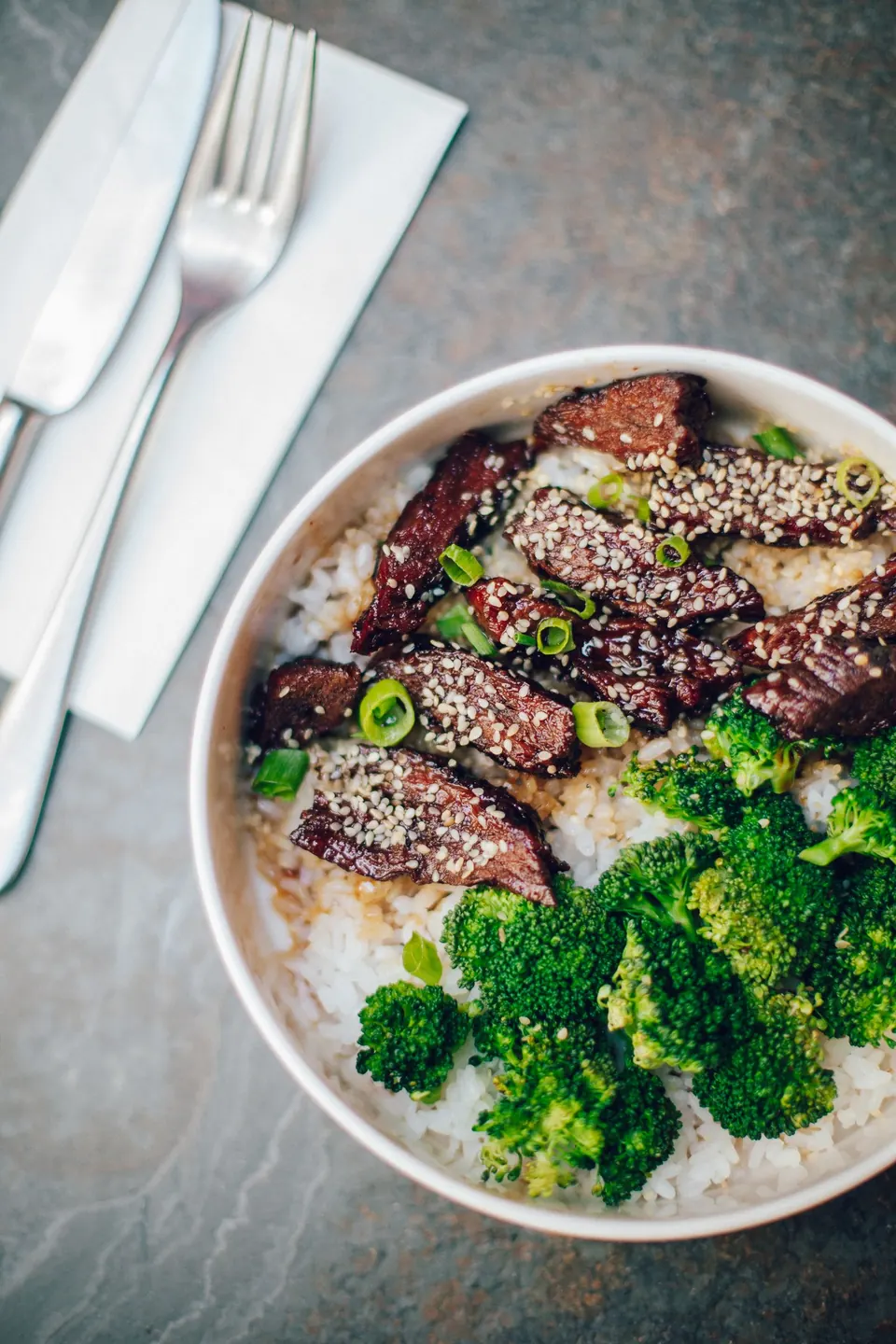
Rice, beef and broccoli bowl
Switch up the protein every day so you don't get tired of the same taste.
Photo: ROMAN ODINTSOV on Pexels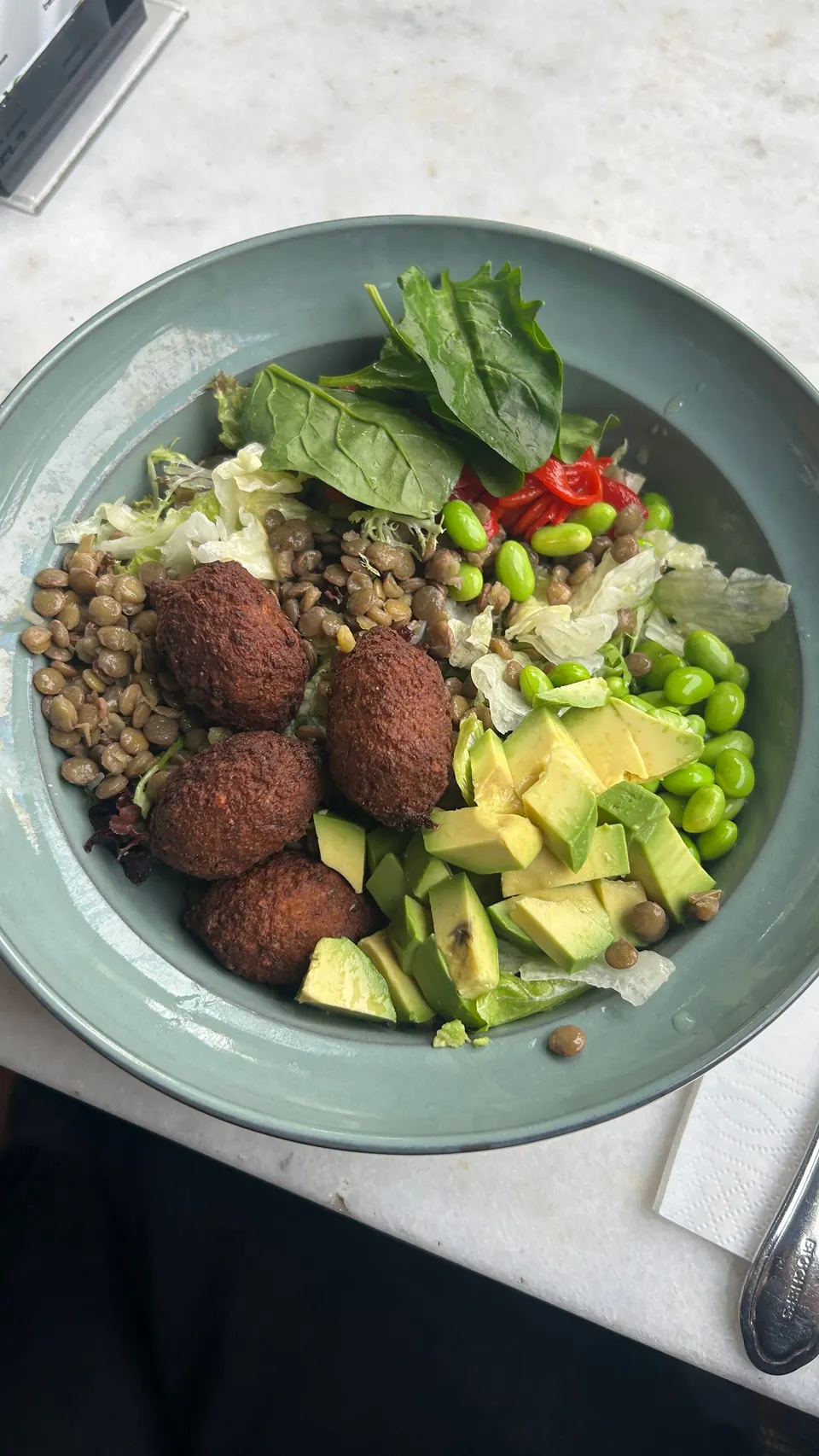
Falafel, lentil and avocado bowl
Lentils add protein and fiber, and a quarter of an avocado is plenty.
Photo: Gizem Erim on Pexels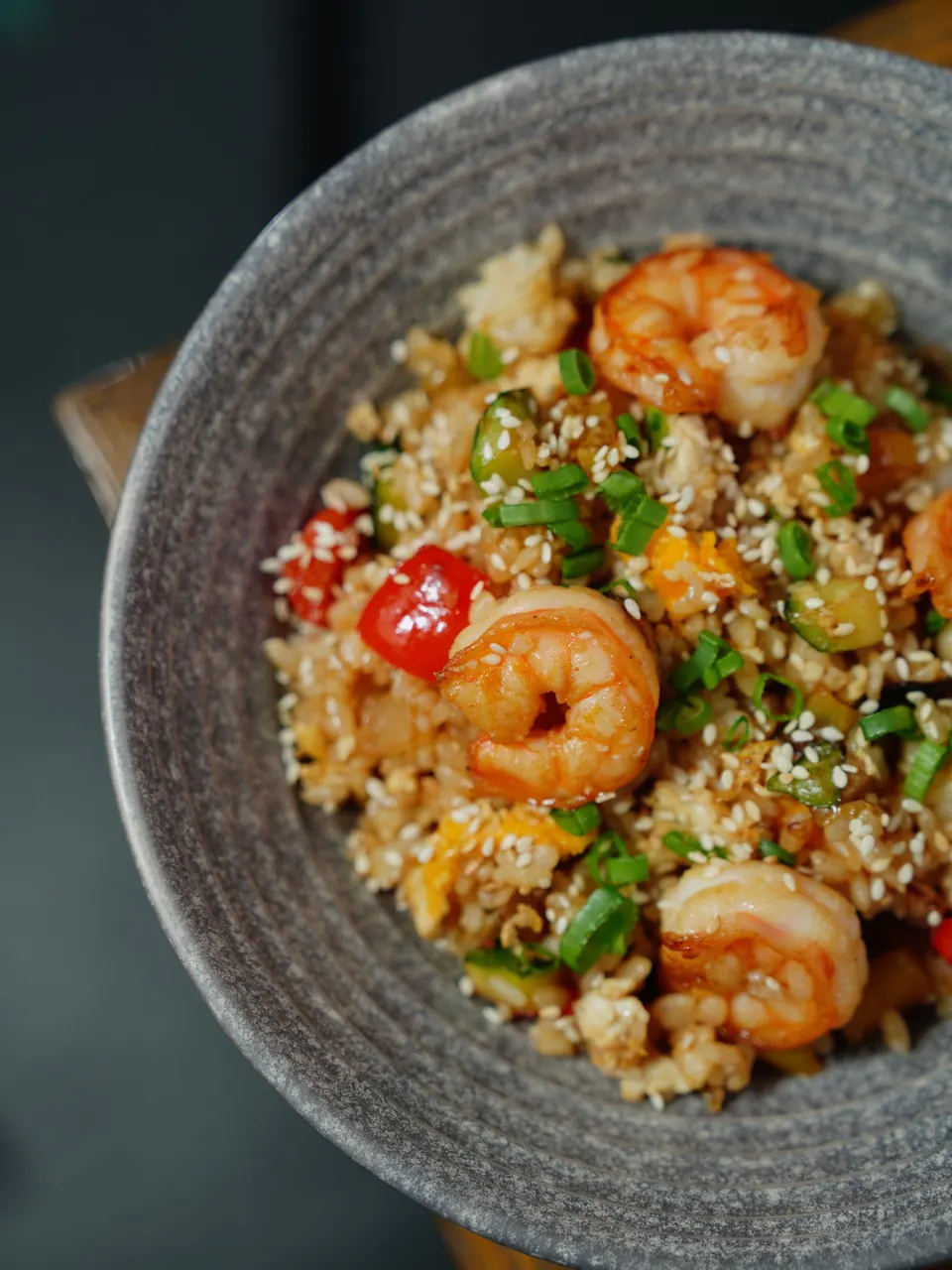
Rice and shrimp bowl
Shrimp is high in protein and cooks in just a few minutes.
Photo: Nadin Sh on Pexels
Make-ahead sandwiches for busy days
If your day is packed and a big box won't work, a sandwich is the answer: whole-wheat bread, a protein and some vegetables. A large whole-wheat pita with 2 tablespoons of hummus and a boiled egg comes to about 316 calories, and it keeps you fuller than a bag of chips with the same calories.
Make it the night before and wrap it in parchment paper, and pack the sauce in a small container on its own so the bread doesn't go soggy.
Calories in common lunch box ingredients
| Food | Calories | Proteing | Fiberg |
|---|---|---|---|
| Whole-wheat pita1 large, 64 gUSDA | 168 | 6.3 | 3.9 |
| Hummus2 tbsp, 30 gUSDA | 71 | 2.3 | 1.6 |
| Hard-boiled egg1 large, 50 gUSDA | 78 | 6.3 | 0 |
| Cooked salmon1 fillet, 100 gUSDA | 206 | 22.1 | 0 |
| Boiled chickpeas1/2 cup, 82 gUSDA | 134 | 7.3 | 6.2 |
| Nonfat Greek yogurt1 tub, 170 gUSDA | 100 | 17.3 | 0 |
| Avocado1/4 fruit, 50 gUSDA | 80 | 1 | 3.4 |
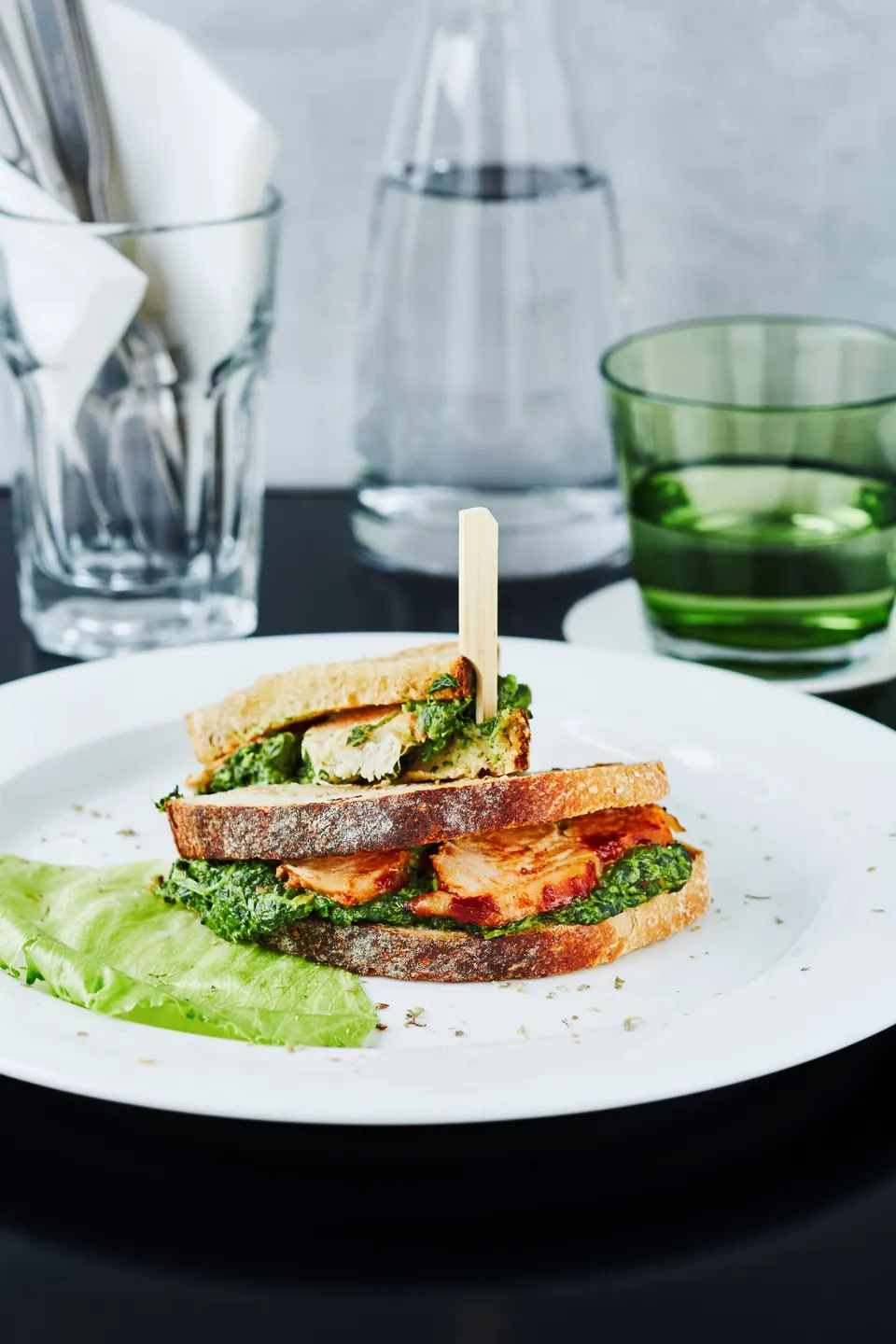
Chicken and spinach sandwich
Grilled chicken left over from dinner, with spinach for color.
Photo: Electra Studio on Pexels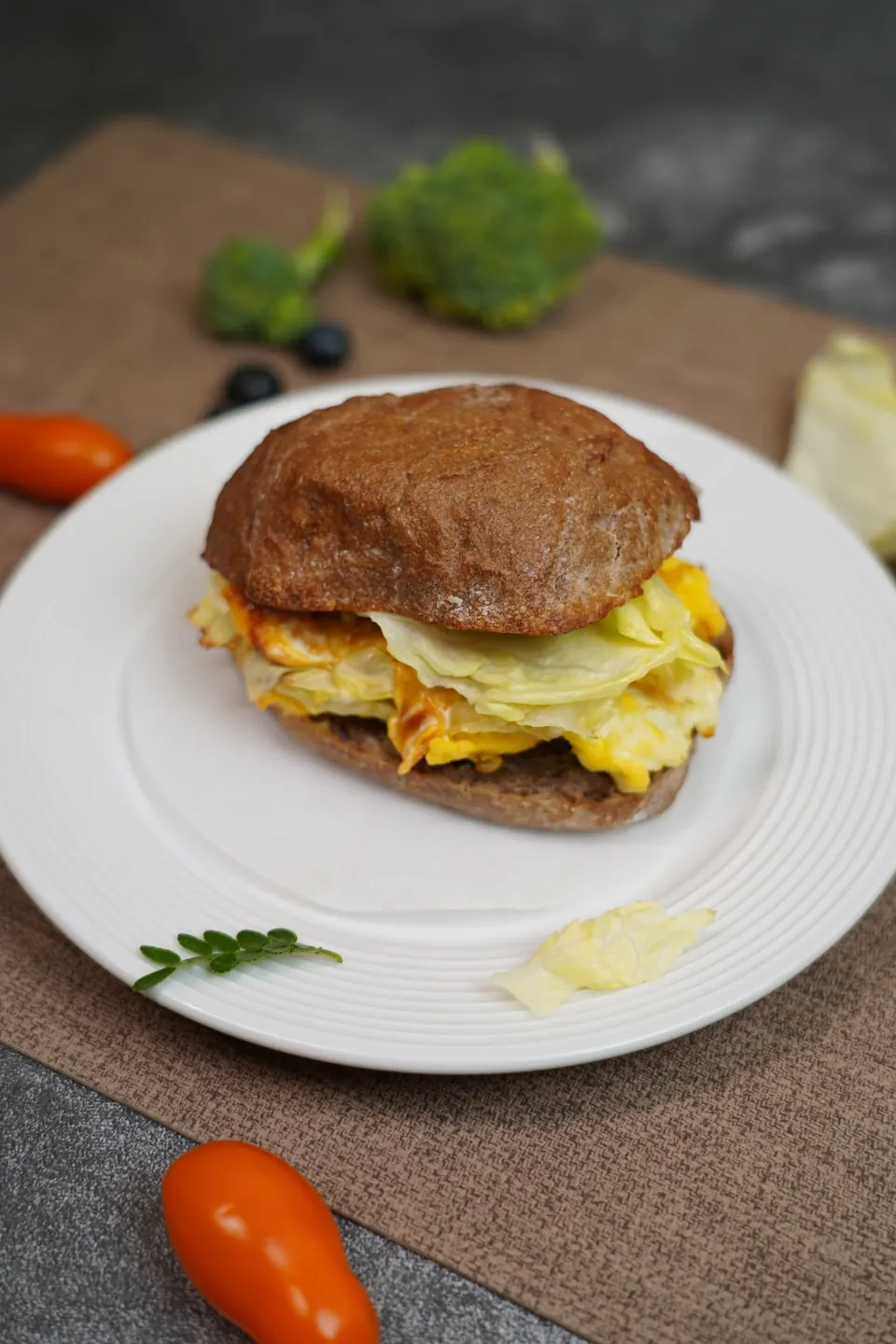
Egg and lettuce sandwich
Boiled eggs mashed with yogurt instead of mayo.
Photo: Darren Fan on Pexels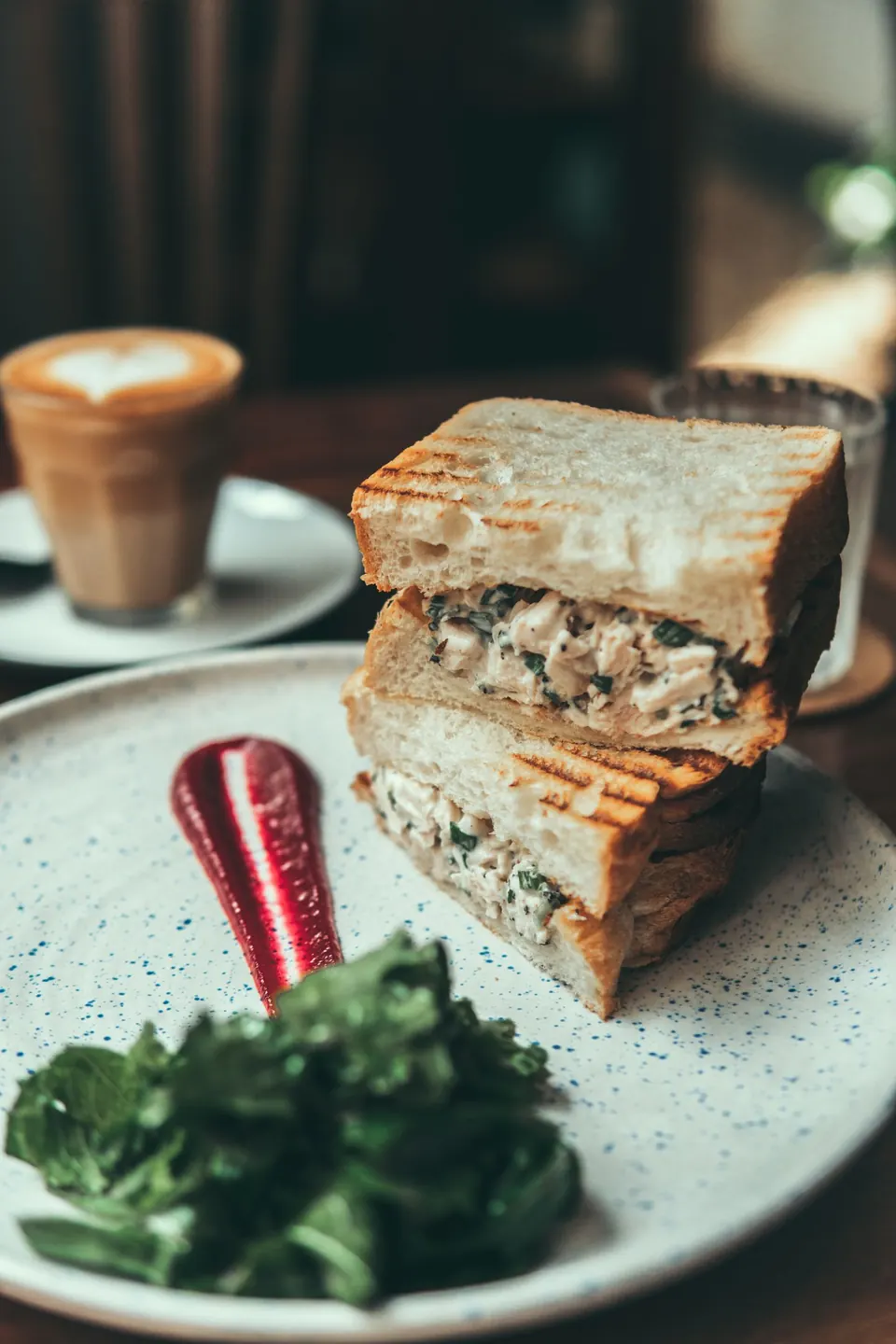
Toasted tuna sandwich
Drained tuna in water with pickles, toasted in the morning.
Photo: Inna Rabotyagina on Pexels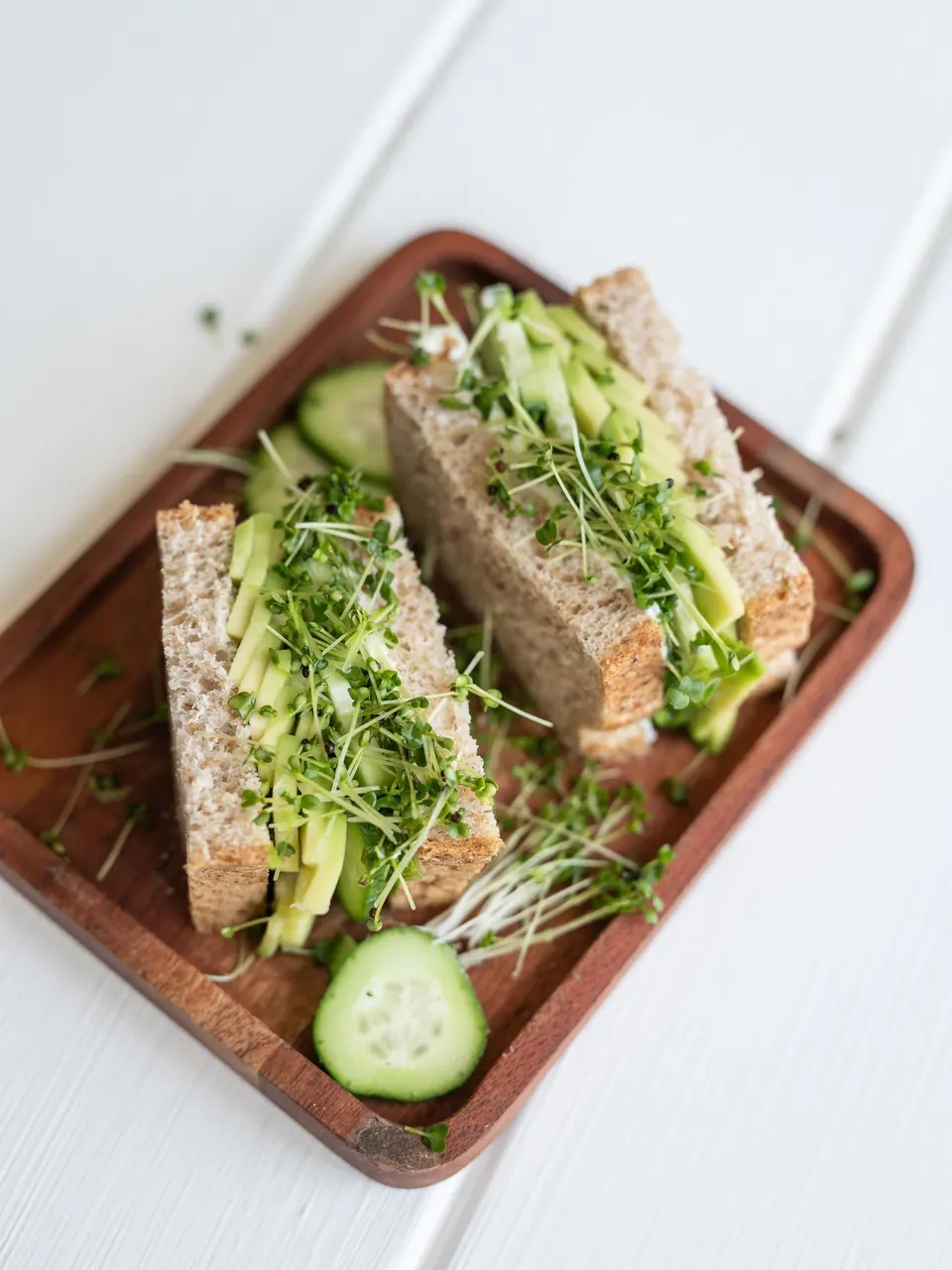
Avocado and cucumber sandwich
Light and fresh; add cottage cheese if you want more protein.
Photo: Oks Malkova on Pexels
Meal prep a whole week of lunches
- Cook rice and protein on Sunday (the start of the Saudi work week), split them into 3 boxes, and cook the rest midweek.
- Weigh the scoop you use once, and save the number on your phone.
- Keep sauces and oil in small separate containers so you control how much goes in.
- Grill or oven-bake chicken instead of frying it, and take the skin off before you portion it.
- Fill half the box with vegetables or salad: the meal looks bigger and fills you up without many extra calories.
Common questions
How many calories in a plate of rice?
A medium plate of cooked white rice, about 300 g, has 390 calories from the rice alone. If it's cooked with olive oil, add 119 calories for every tablespoon.
Is brown rice lower in calories than white rice?
Not by much. Per 100 g cooked, white rice has 130 calories and brown rice has 123. Brown rice's real advantage is more fiber, which helps you feel full.
How much protein is in grilled chicken breast?
Skinless roasted chicken breast has 31 g of protein and 165 calories per 100 g.
How much rice should I put in my lunch box?
There's no single number for everyone; it depends on your needs and how active you are. A good starting point is a small plate, about 150 g, with protein and vegetables, then adjust to how hungry you get.
Sources
- USDA FoodData Central, U.S. Department of Agriculture. Values per 100 g, computed at the portion weight shown:
- Rice, white, long-grain, regular, enriched, cooked FDC 168878
- Rice, brown, long-grain, cooked (Includes foods for USDA's Food Distribution Program) FDC 169704
- Oil, olive, salad or cooking FDC 171413
- Chicken, broilers or fryers, breast, meat only, cooked, roasted FDC 171477
- Chicken, broilers or fryers, breast, meat and skin, cooked, roasted FDC 171075
- Chicken, broilers or fryers, breast, meat and skin, cooked, fried, flour FDC 171476
- Chicken, broilers or fryers, breast, meat and skin, cooked, fried, batter FDC 171475
- Chicken, broilers or fryers, thigh, meat only, cooked, roasted FDC 172388
- Bread, pita, whole-wheat FDC 174916
- Hummus, commercial FDC 174289
- Egg, whole, cooked, hard-boiled FDC 173424
- Fish, salmon, Atlantic, farmed, cooked, dry heat FDC 175168
- Chickpeas (garbanzo beans, bengal gram), mature seeds, cooked, boiled, without salt FDC 173757
- Yogurt, Greek, plain, nonfat (Includes foods for USDA's Food Distribution Program) FDC 170894
- Avocados, raw, all commercial varieties FDC 171705
Numbers are computed from USDA per-100 g values at the weight in each table, and rounded. Real food varies by recipe and brand.