What to Eat Before and After the Gym: Carbs Before, Protein After
Before a workout your body wants carbs for energy, and after it wants protein. Lentils and beans give you both, plus iron.
A lot of us head to the gym on an empty stomach because eating first feels like it cancels out the effort, or we grab a protein bar beforehand and then wonder why we have no energy. The truth is that your body needs fuel before a workout, and its main fuel is carbs. After the workout it needs protein so your muscles can recover and actually benefit from the work you put in.
In this guide we brought together the timing advice from the joint position paper led by the American College of Sports Medicine, plus food numbers from the US Department of Agriculture (USDA): what to eat before a workout and when, how much protein is enough afterward, and why lentils, chickpeas and fava beans are a smart choice for women in particular, since they put protein and iron on the same plate.
In this guide 9
- Before the gym: why carbs are your fuel
- Calories and carbs in pre-workout snacks
- What to eat before the gym: ideas
- After the gym: how much protein do you need?
- Protein in post-workout foods
- What to eat after the gym: ideas
- Lentils and beans: the protein and iron you overlook
- Protein and iron in lentils and beans
- Simple steps for gym-day eating
Before the gym: why carbs are your fuel
Carbs are the fastest source of energy during exercise, and your body stores them in your muscles and liver. When you train with those stores running low, you tire quickly and cannot keep going at the same intensity. That is why the joint position paper from the American College of Sports Medicine advises athletes training for longer than 60 minutes to eat carbs 1 to 4 hours before exercise1.
The same paper says it may help to avoid food that is high in fat, protein or fiber right before training, so your stomach does not bother you while you move. A plate of ful (fava beans in olive oil) or a burger half an hour before the gym is not a great idea, even though both are perfectly good meals at another time.
Timing sets the portion: the closer you are to your workout, the smaller and easier to digest the food should be. This is not a strict rule, so experiment and see what sits well with you.
Calories and carbs in pre-workout snacks
| Food | Calories | Carbsg | Proteing | Fiberg |
|---|---|---|---|---|
| Banana1 medium, 118 gUSDA | 105 | 26.9 | 1.3 | 3.1 |
| Medjool dates2 dates, 48 gUSDA | 133 | 36 | 0.9 | 3.2 |
| Rice cakes2 cakes, 18 gUSDA | 70 | 14.7 | 1.5 | 0.8 |
| Honey1 tbsp, 21 gUSDA | 64 | 17.3 | 0.1 | 0 |
| Oatmeal, cooked with water1 cup, 234 gUSDA | 166 | 28.1 | 5.9 | 4 |
| Whole wheat bread1 slice, 32 gUSDA | 81 | 13.7 | 4 | 1.9 |
| Low-fat Greek yogurt1 container, 170 gUSDA | 100 | 6.1 | 17.3 | 0 |
| Blueberrieshalf a cup, 74 gUSDA | 42 | 10.7 | 0.5 | 1.8 |
A medium banana has 26.9 g of carbs and two Medjool dates have 36 g. Both are quick carbs before a workout.
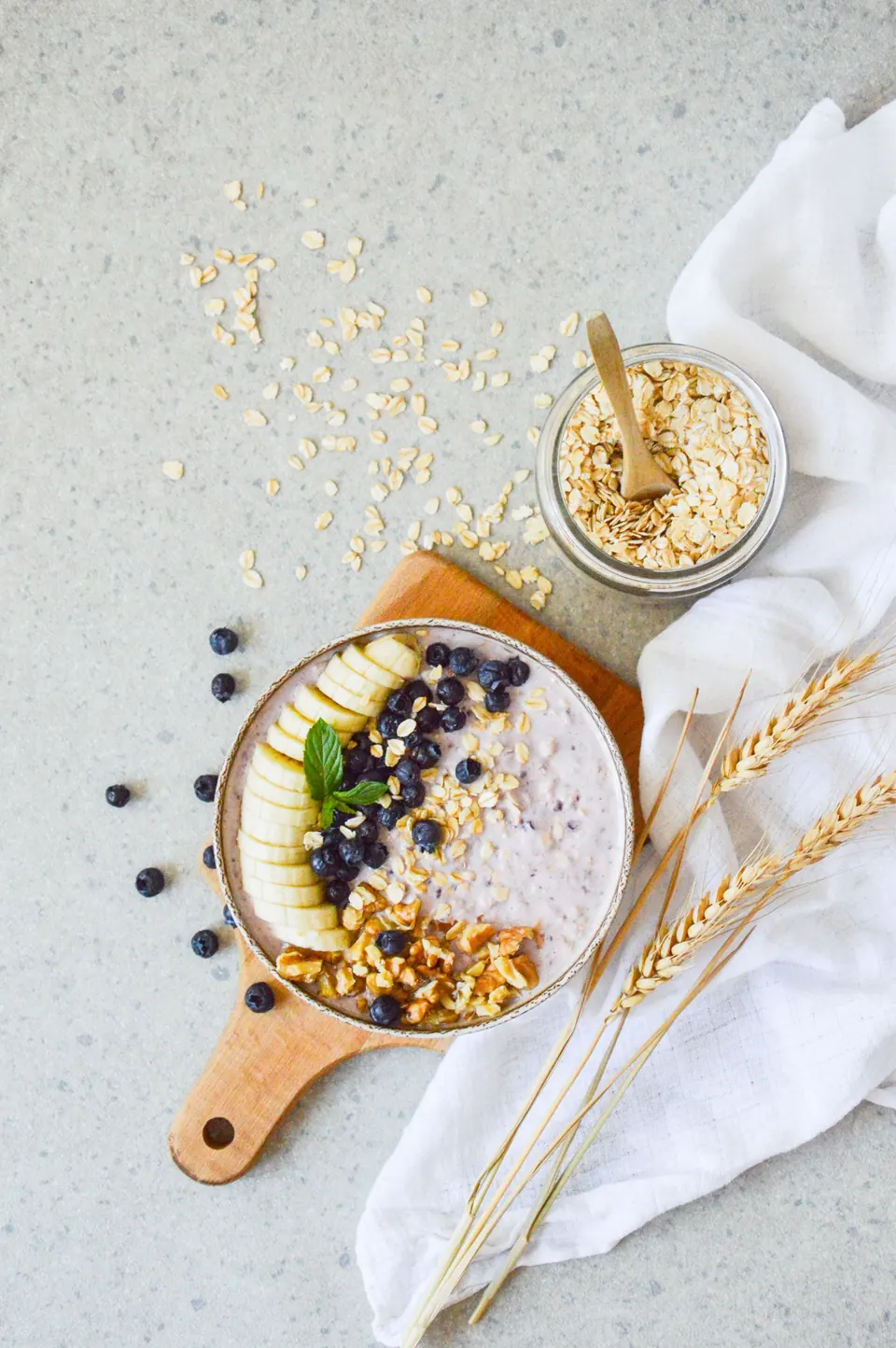
What to eat before the gym: ideas
Light carbs give you energy, and the closer the workout, the smaller the snack.
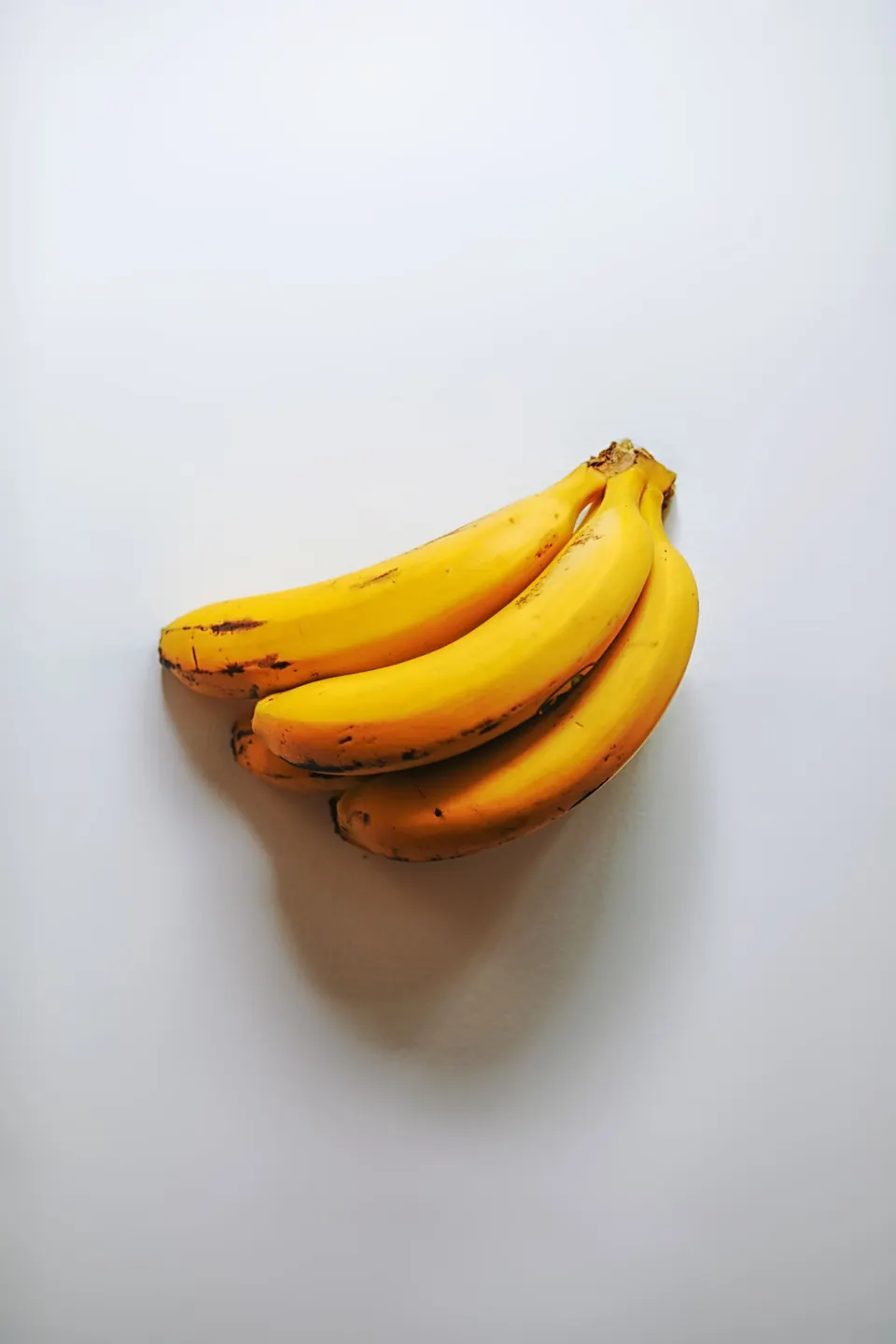
Banana, quick carbs
A medium banana is 105 calories, easy to toss in your bag and quick to digest.
Photo: ata alikate on Pexels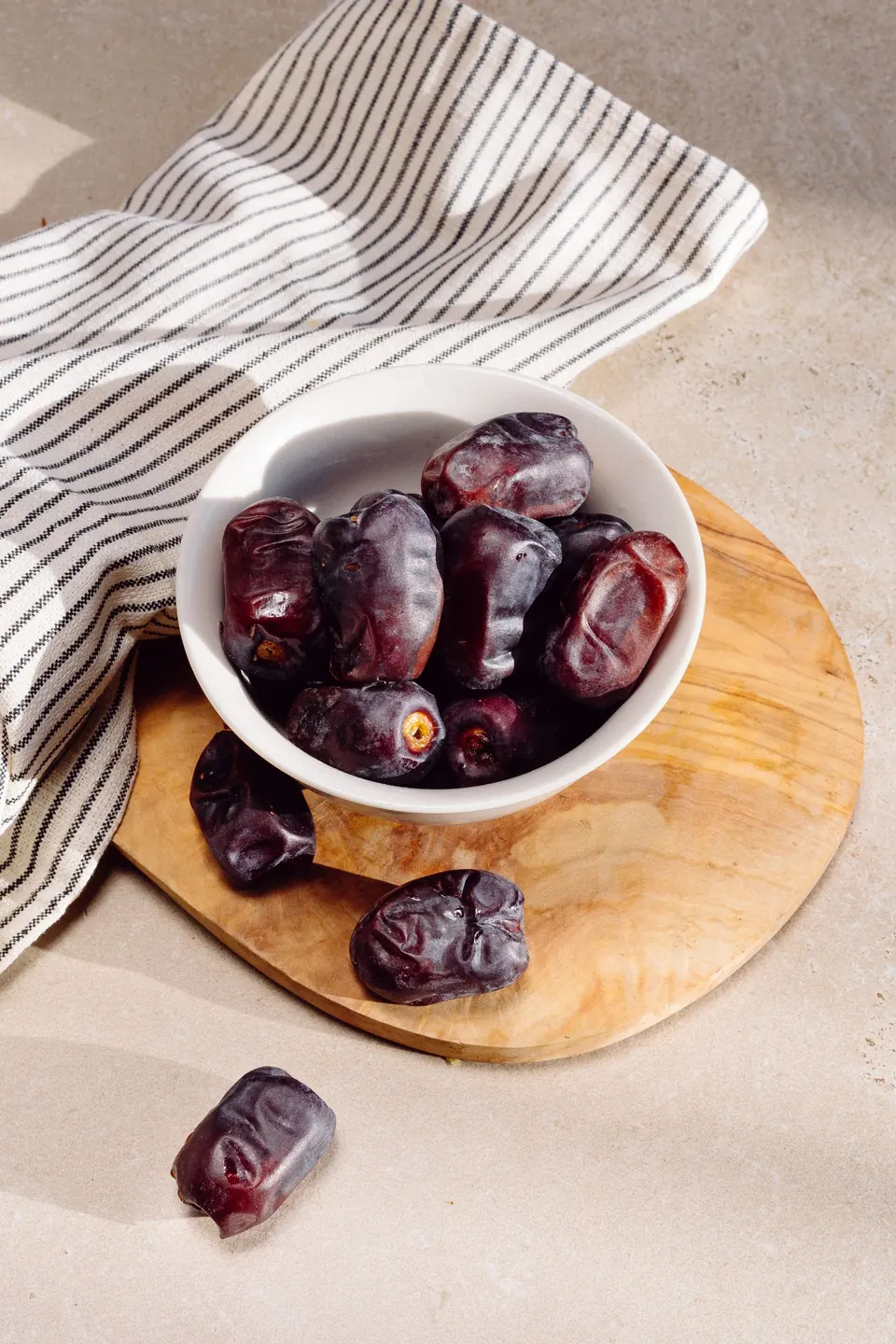
Dates, quick carbs
Two Medjool dates have 133 calories, fast energy before you train.
Photo: Antoni Shkraba on Pexels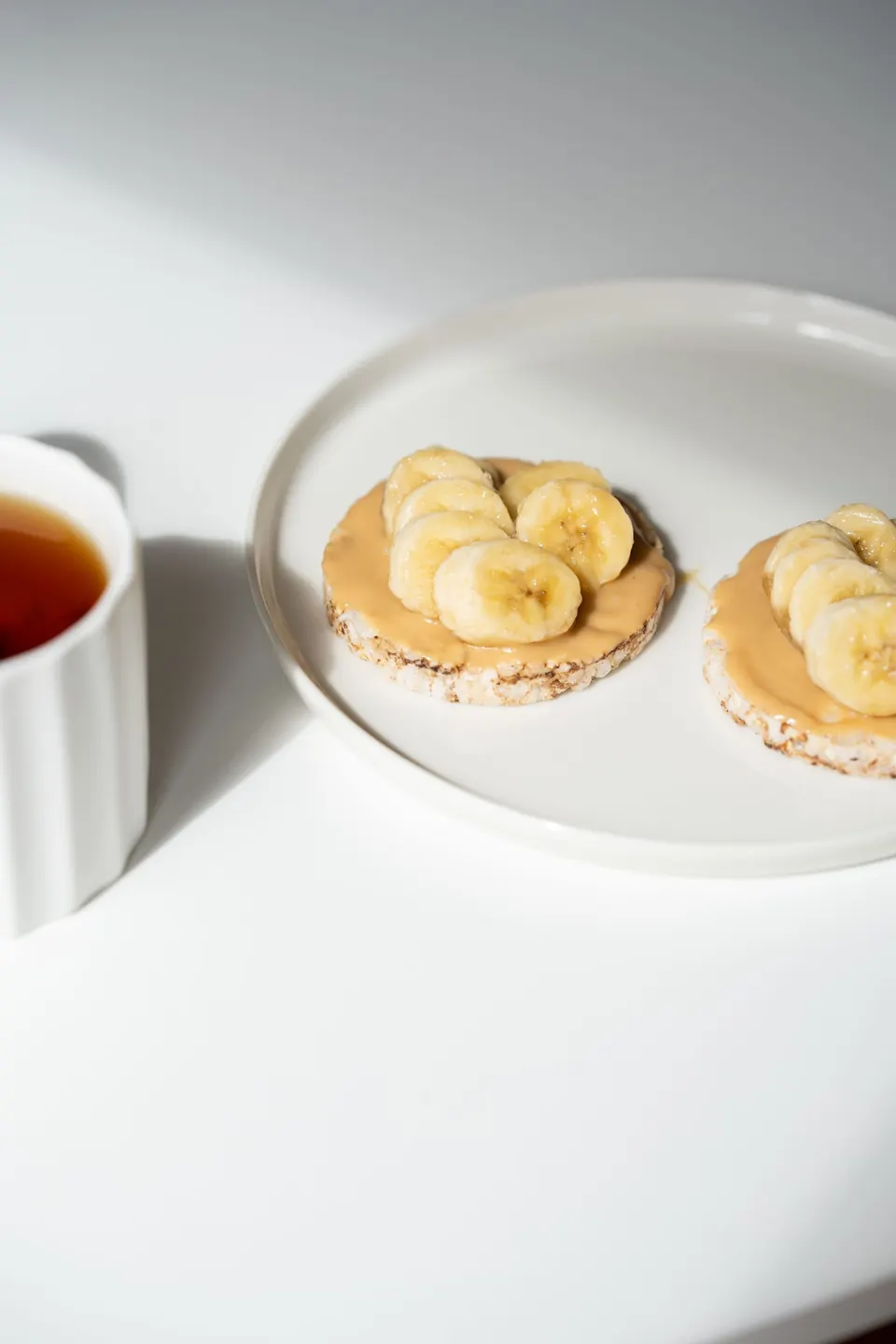
Rice cakes and banana
Two rice cakes with a tablespoon of honey come to about 134 calories and sit lightly in your stomach.
Photo: Gül Işık on Pexels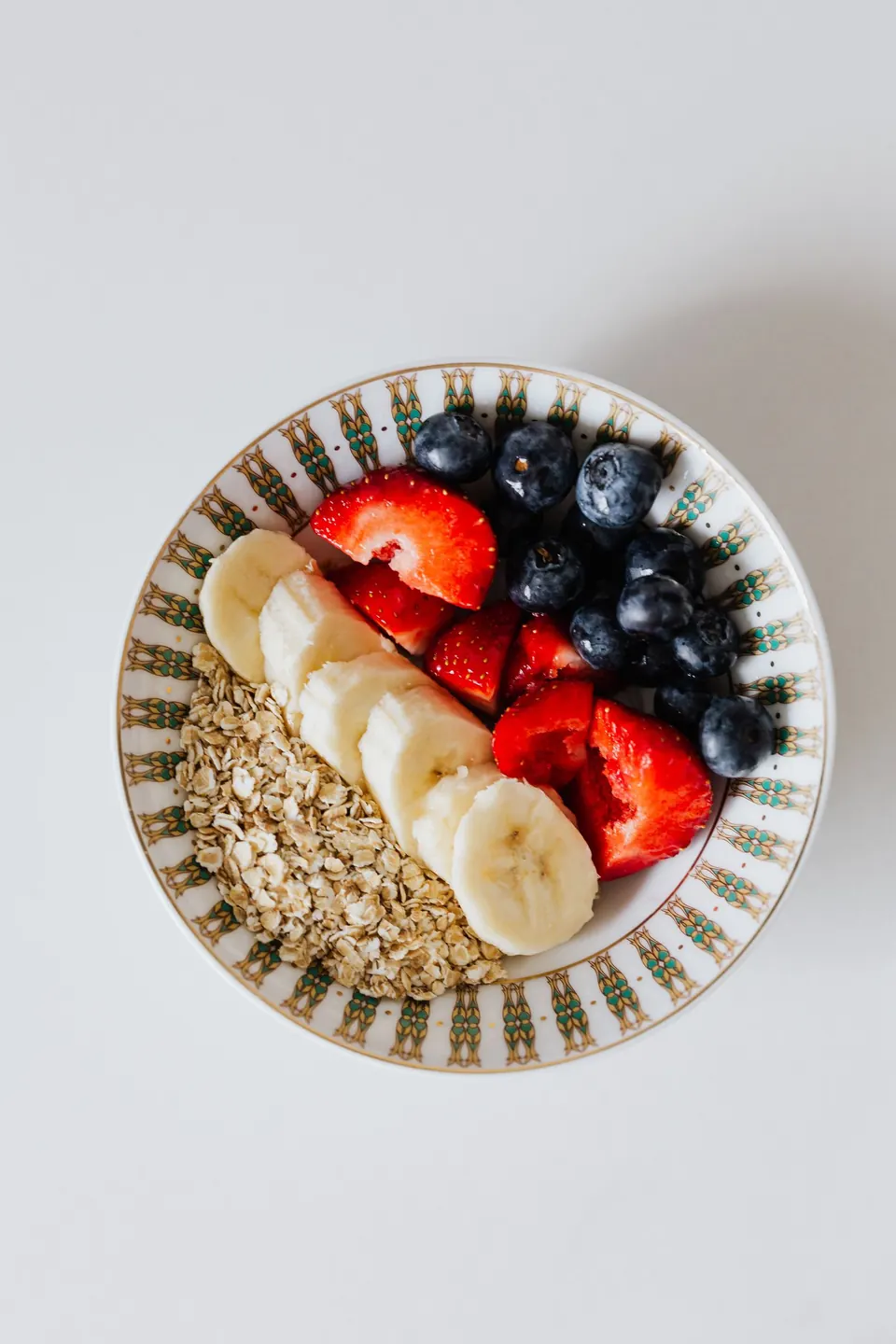
Oats and fruit
A cup of oatmeal with half a banana has about 42 g of carbs; eat it two hours or more before.
Photo: https://kaboompics.com/ on Pexels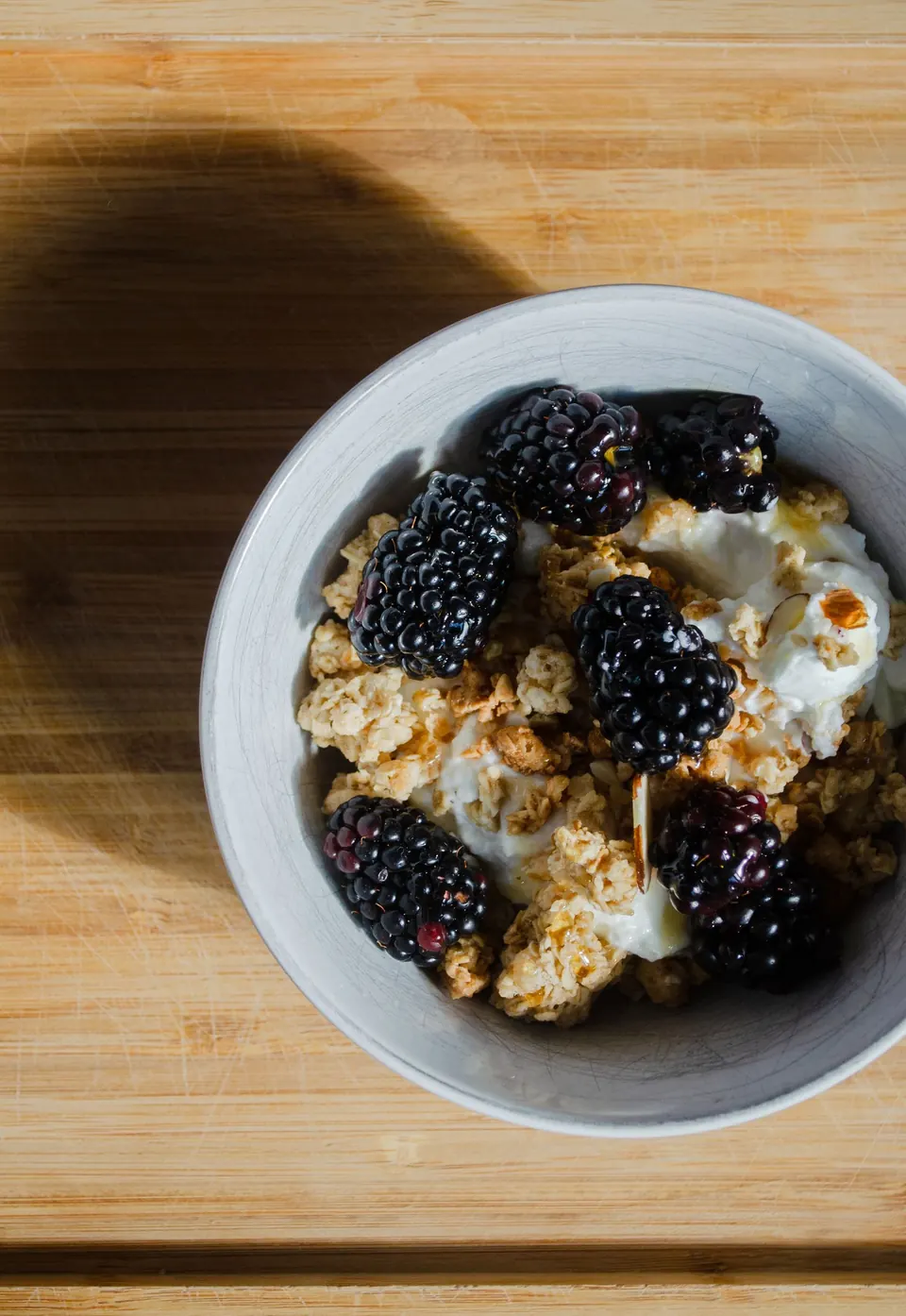
Yogurt, berries and granola
Yogurt adds a little protein and the berries and granola add carbs, good about two hours before.
Photo: Lindsey Flynn on Pexels
After the gym: how much protein do you need?
After a workout your muscles are ready to rebuild and recover, and protein is the building material. The joint position paper says athletes benefit from 15 to 25 g of protein within the first two hours after exercise, and then from spreading protein across meals every 3 to 5 hours1. You do not need huge amounts; what matters is spreading protein through your day.
A serving of grilled chicken breast (150 g) has 46.5 g of protein and 248 calories, more than enough. A container of Greek yogurt has 17.3 g, and two boiled eggs with a slice of whole wheat bread have 16.6 g. Half a can of tuna in water gives you about 21 g.
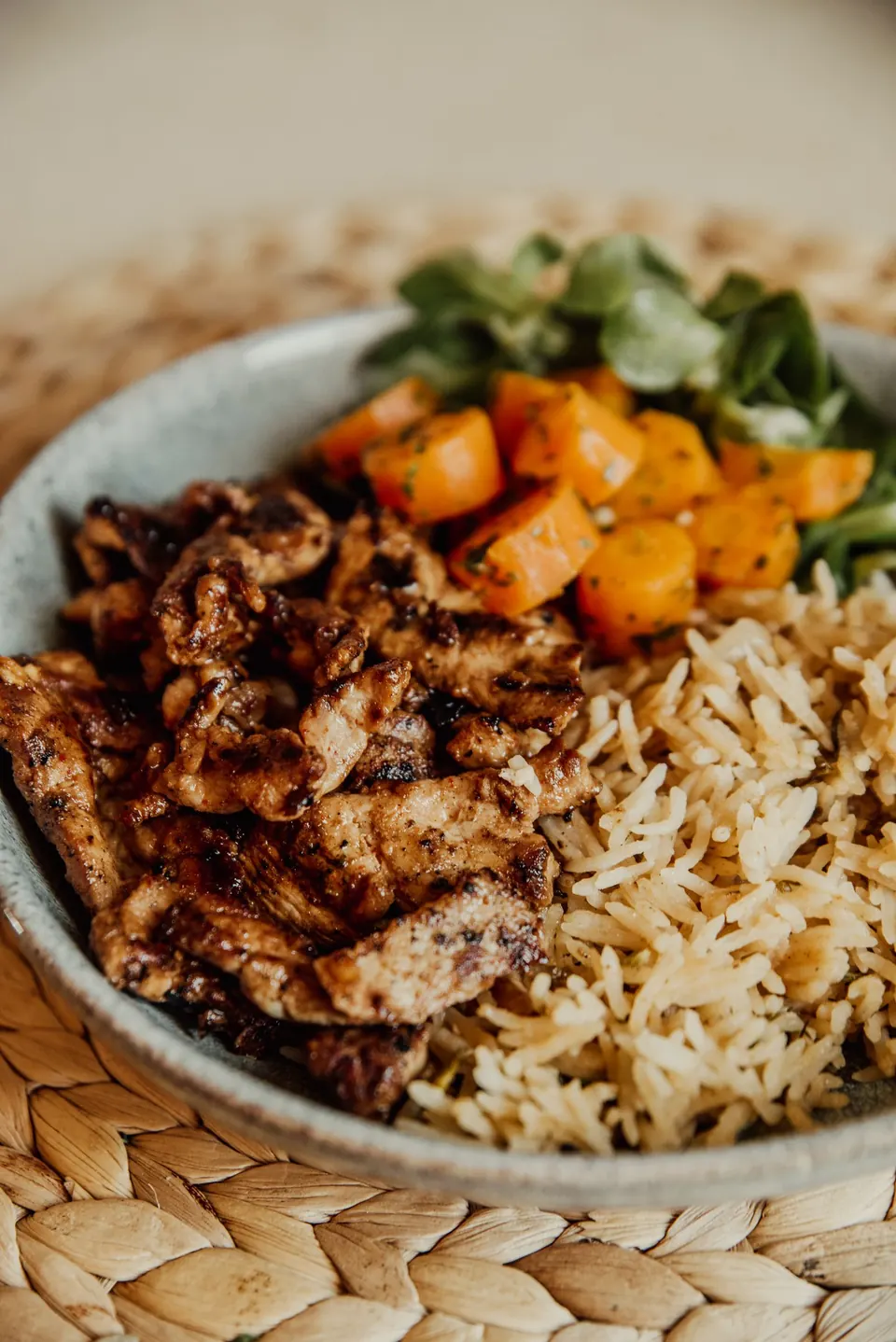
Do not forget carbs after training too, since they refill your energy stores. Rice with a serving of grilled chicken comes to 453 calories and 50.8 g of protein, a complete meal after a training day.
Protein in post-workout foods
| Food | Calories | Proteing | Carbsg |
|---|---|---|---|
| Grilled chicken breast, skinless1 serving, 150 gUSDA | 248 | 46.5 | 0 |
| Tuna in water, drained1 can, 165 gUSDA | 191 | 42.1 | 0 |
| Hard-boiled eggs2 eggs, 100 gUSDA | 155 | 12.6 | 1.1 |
| Low-fat Greek yogurt1 container, 170 gUSDA | 100 | 17.3 | 6.1 |
| Lean beef steak1 small piece, 85 gUSDA | 160 | 25.8 | 0 |
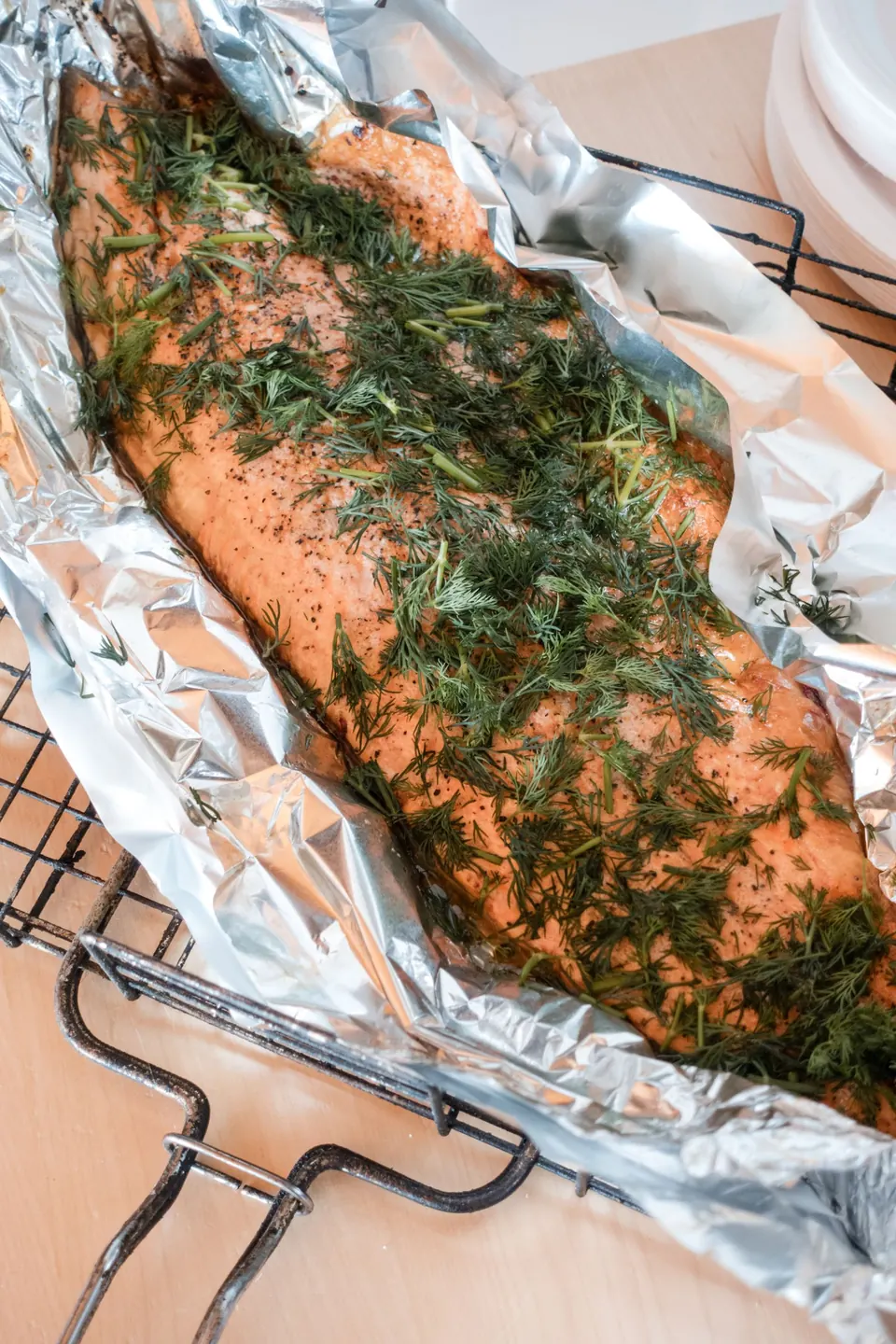
| Salmon, cooked1 fillet, 100 gUSDA | 206 | 22.1 | 0 |
| White rice, cooked1 cup, 158 gUSDA | 205 | 4.3 | 44.6 |
| Baked potato with skin1 medium, 173 gUSDA | 161 | 4.3 | 36.7 |
What to eat after the gym: ideas
Meals with a clear protein source that are quick and filling.
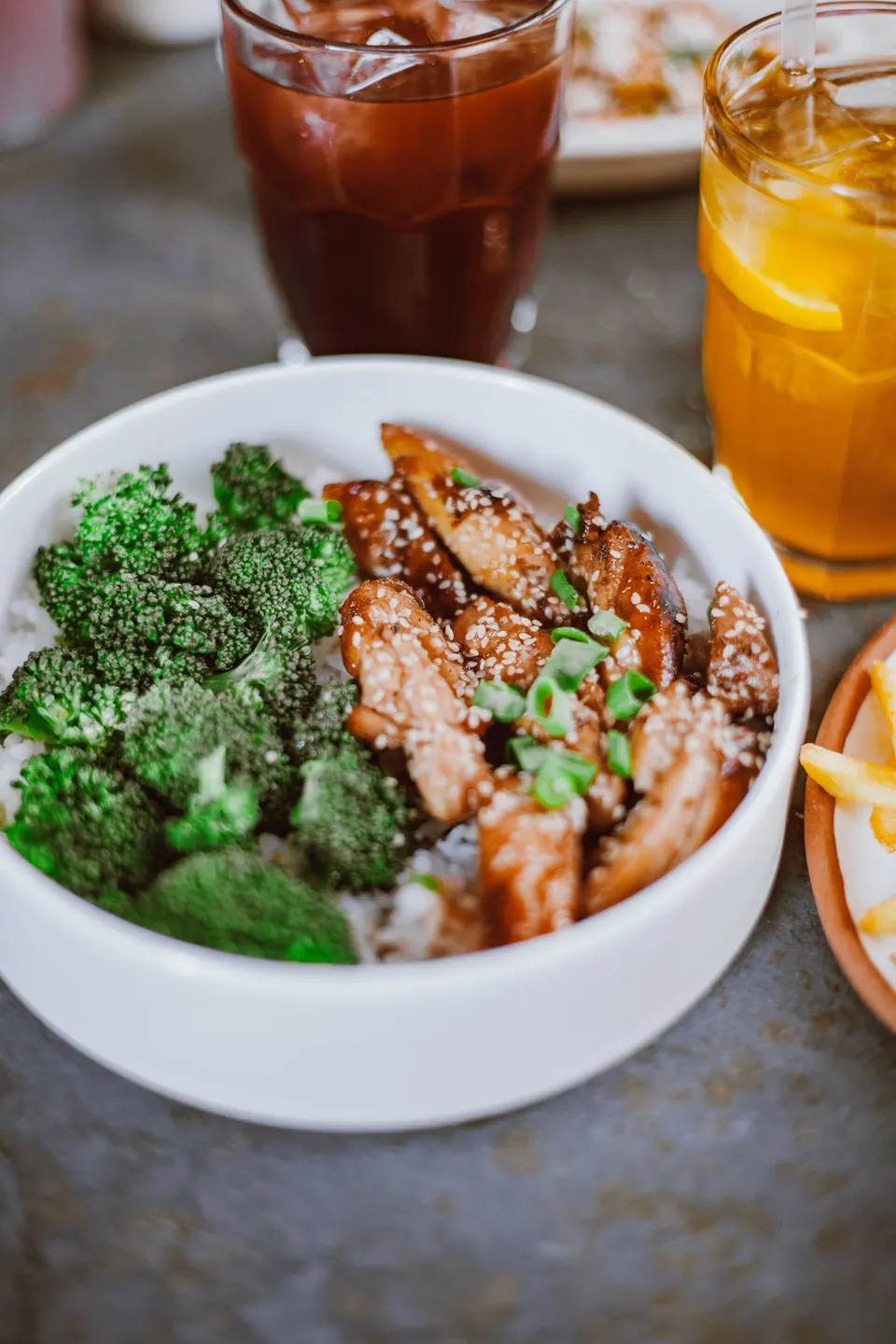
Chicken and broccoli
Grilled chicken with steamed broccoli, plus rice if your workout was a long one.
Photo: ROMAN ODINTSOV on Pexels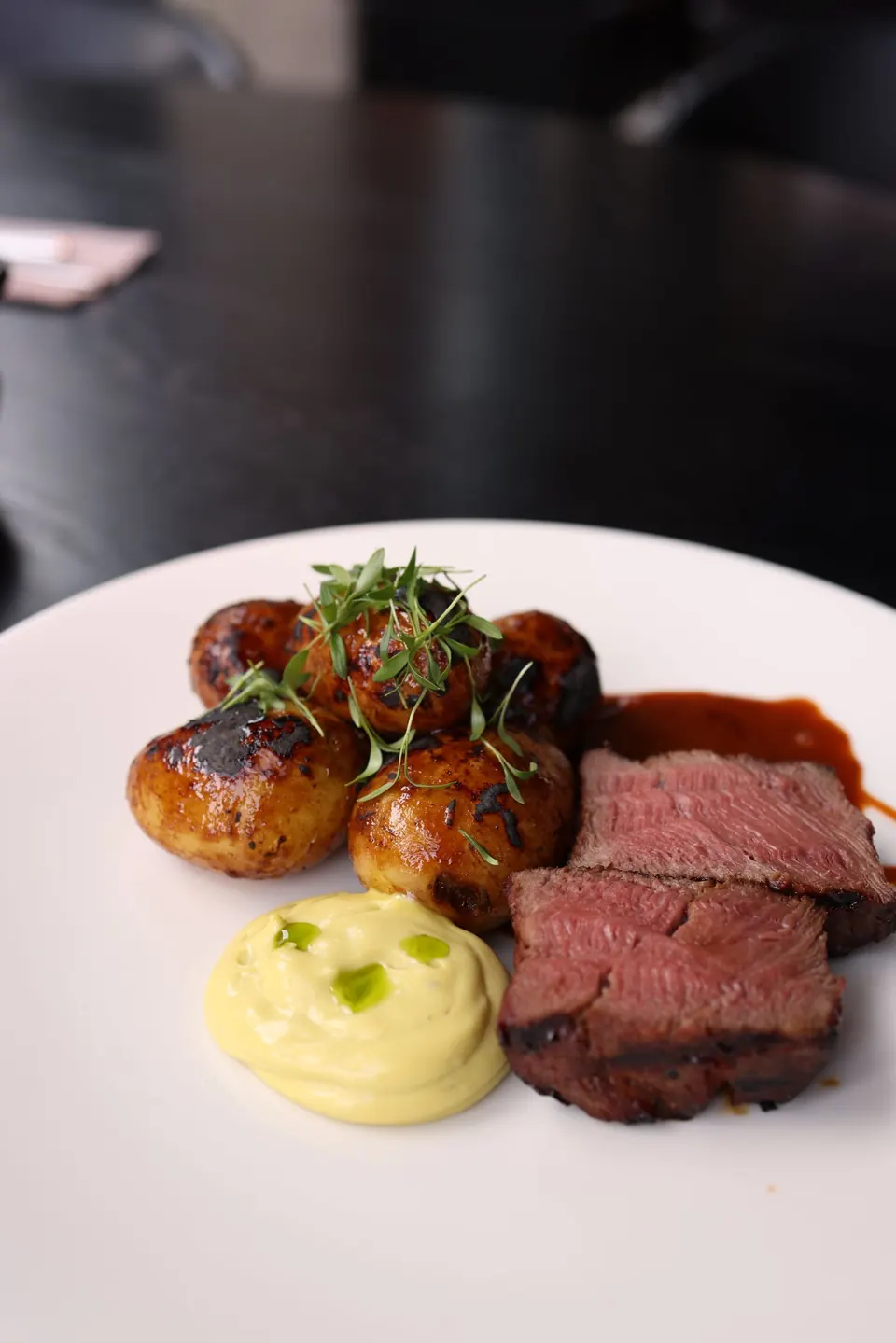
Steak and potatoes
A small steak has 25.8 g of protein, and a baked potato adds carbs to restore your energy.
Photo: Valeria Boltneva on Pexels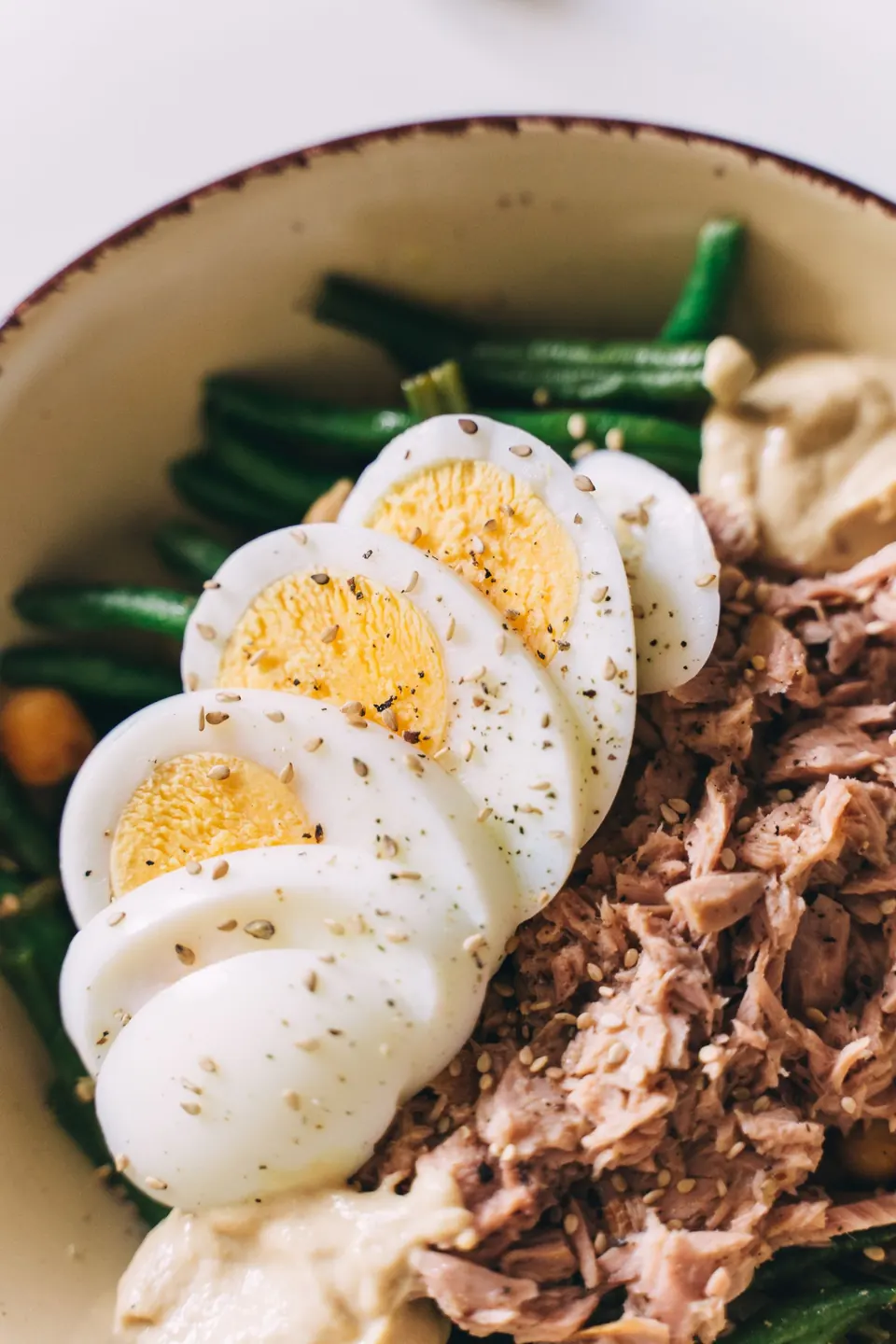
Tuna, eggs and beans
A protein plate of tuna and boiled eggs, ready in 5 minutes.
Photo: Alesia Kozik on Pexels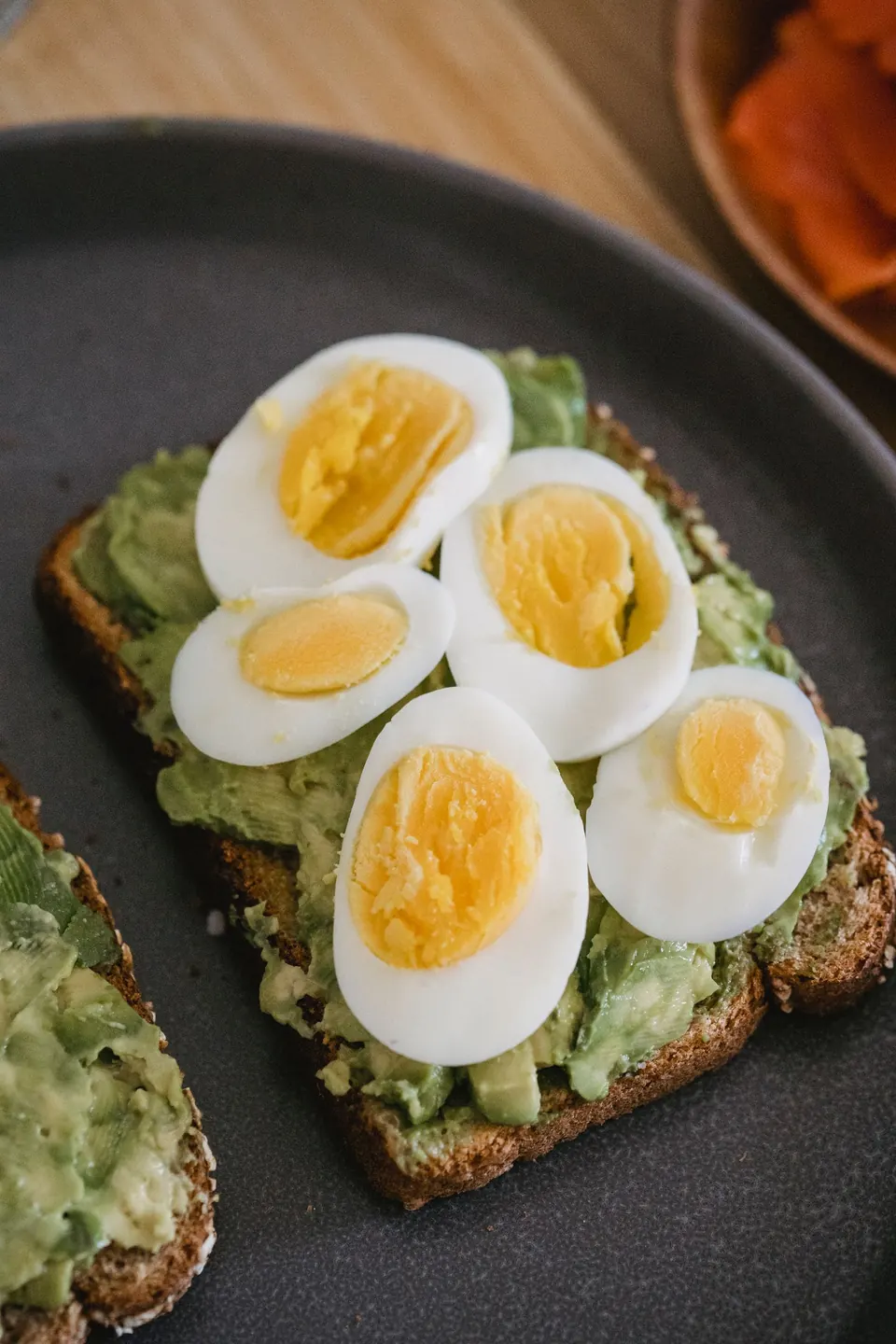
Boiled eggs on toast
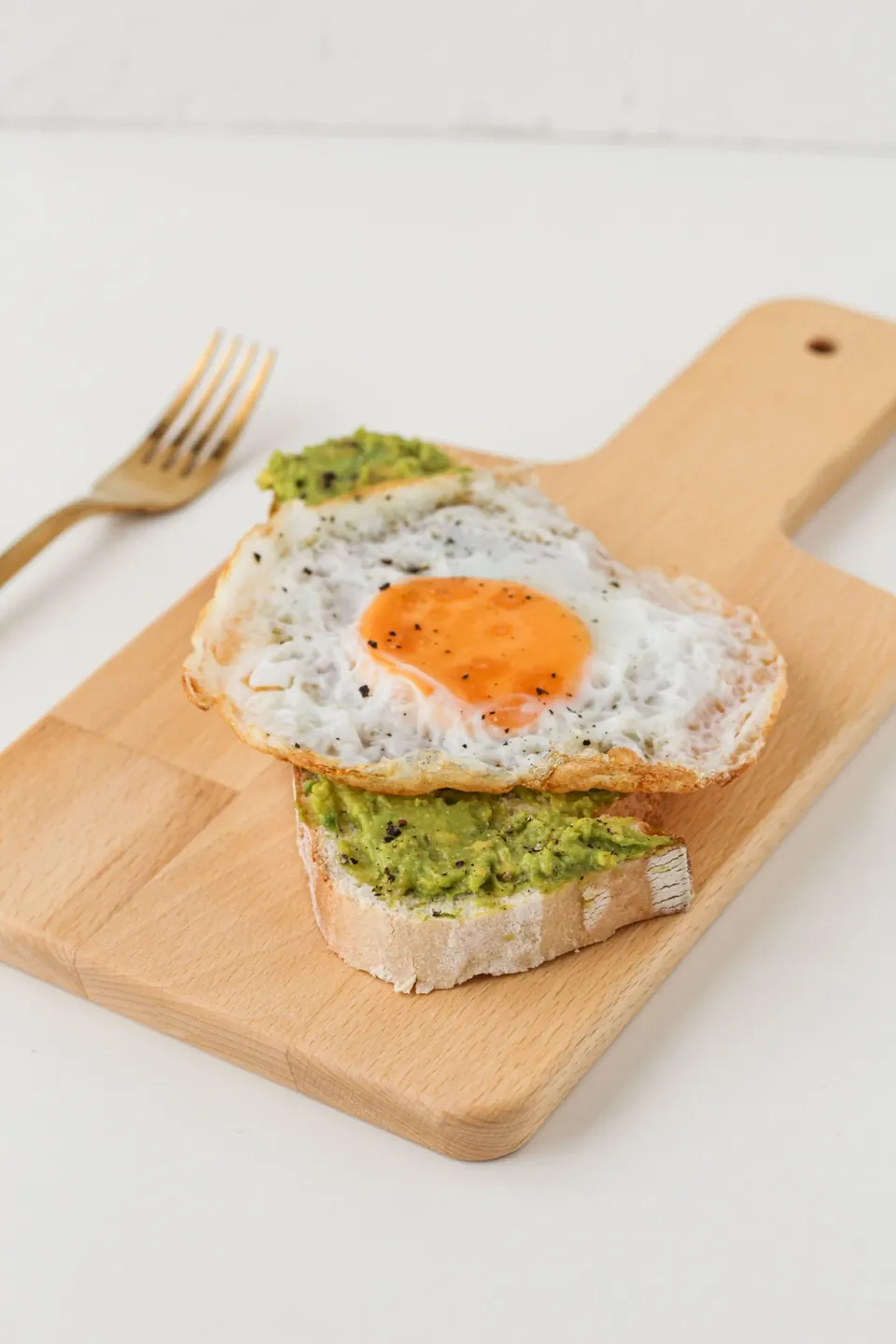
Two eggs on a slice of whole wheat toast with avocado, for breakfast or dinner after training.
Photo: Nicola Barts on Pexels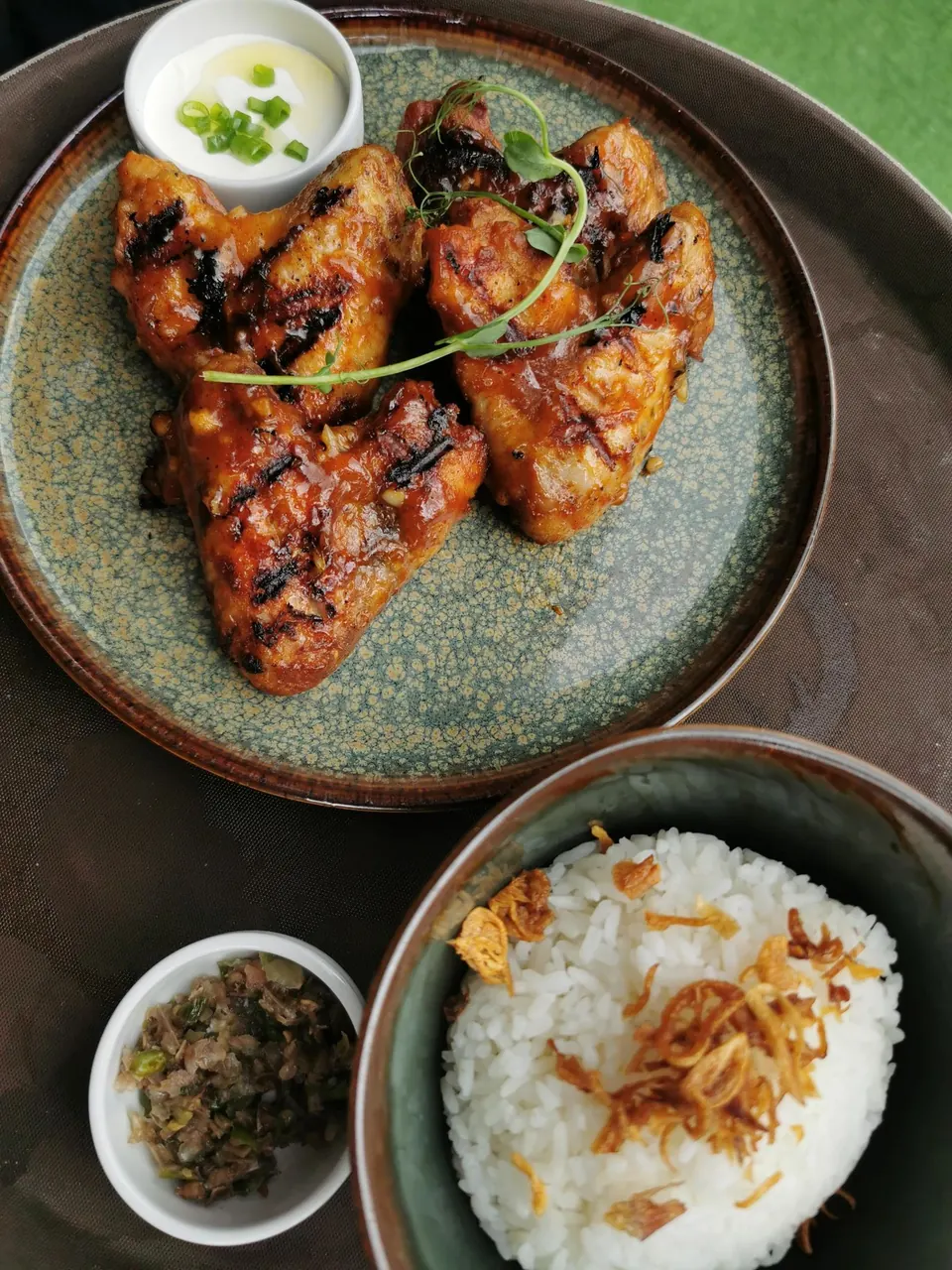
Grilled chicken and rice
The classic: protein and carbs on one plate.
Photo: Monakha laden on Pexels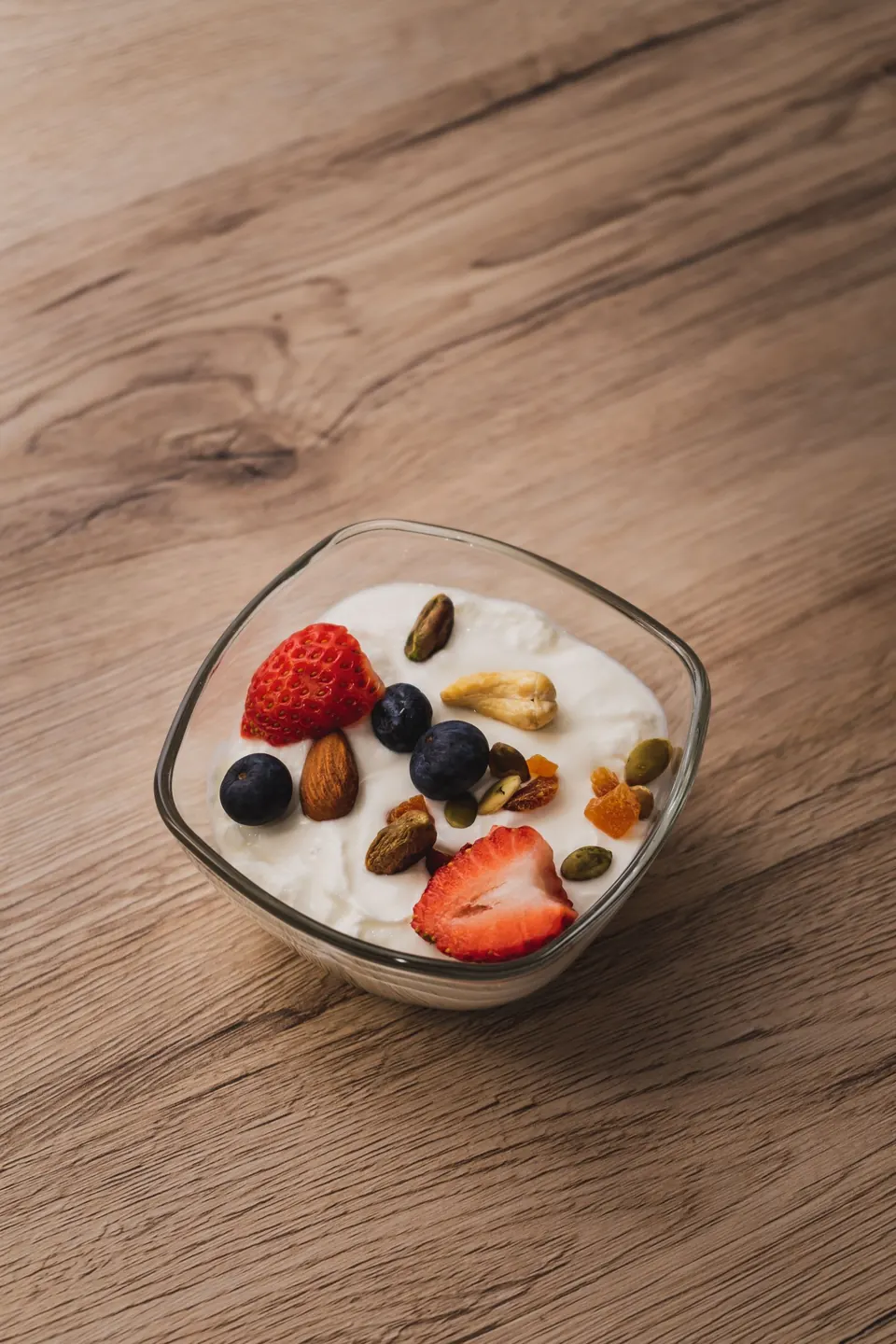
Greek yogurt and nuts
A container of Greek yogurt with 7 walnut halves: 192 calories and 19.5 g of protein.
Photo: Vlad Chețan on Pexels
Lentils and beans: the protein and iron you overlook
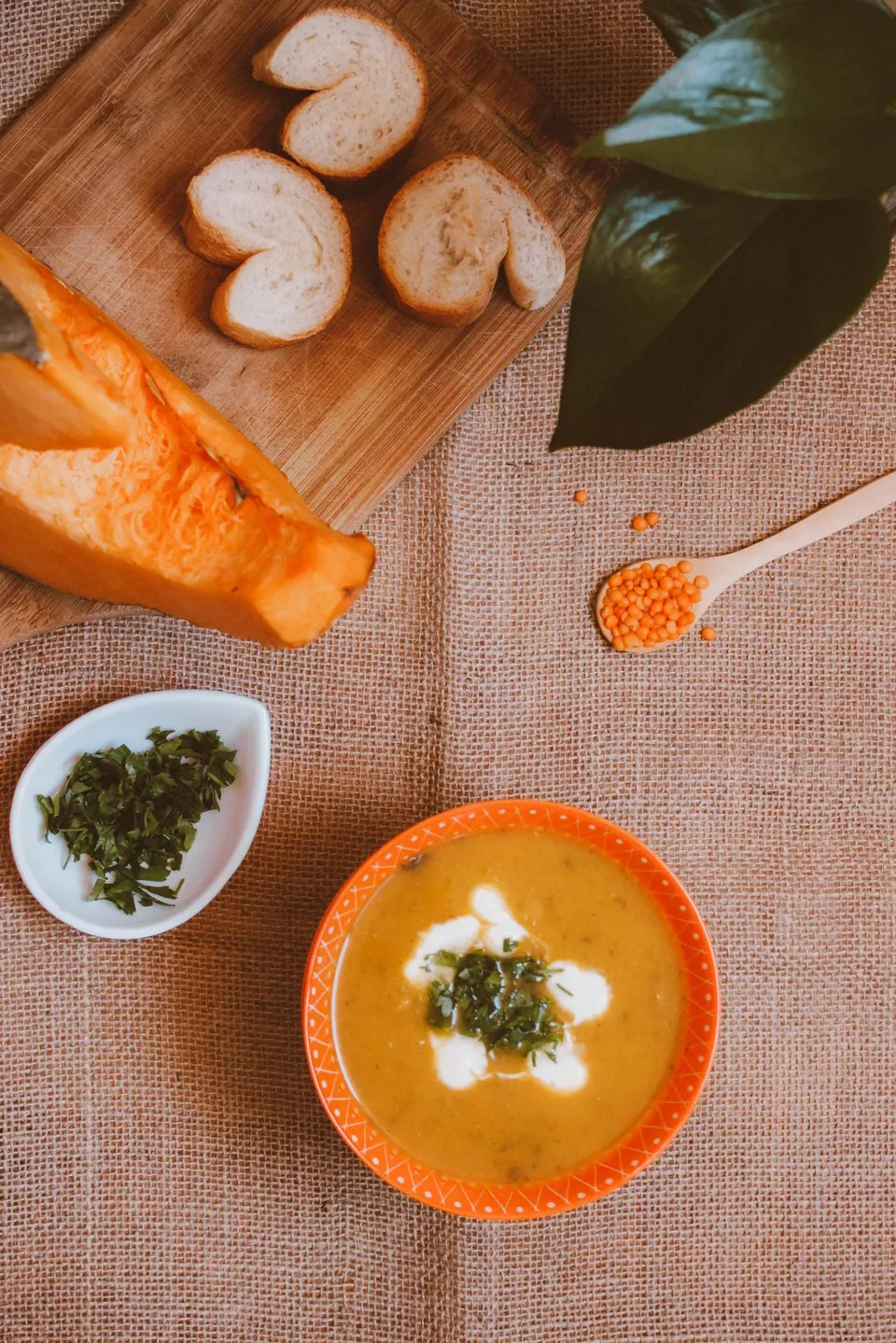
A cup of cooked lentils has 17.9 g of protein and 230 calories, close to the protein in 3 eggs (18.9 g). A cup of cooked chickpeas has 14.5 g of protein and 269 calories, kidney beans 15.3 g and 225 calories, and a cup of ful (canned fava beans) 14 g of protein and 182 calories. On top of that they are full of fiber: a cup of lentils alone has 15.6 g.
The benefit that matters most for women is iron. Women aged 19 to 50 need 18 mg of iron a day, compared with only 8 mg for men, and during pregnancy the need rises to 27 mg3. The main reason is that your period costs your body iron every month. A cup of lentils has 6.6 mg of iron, which is 37% of your daily need.
Legume iron is plant iron, though, and your body absorbs it less well than iron from meat. The fix is simple: vitamin C helps your body absorb plant iron, and eating meat, chicken or fish alongside legumes helps too3. A squeeze of lemon on your ful or lentil soup, or a tomato salad next to your chickpeas, makes a difference. If you feel tired all the time or your periods are heavy, ask your doctor to check your iron before taking any supplement.
Protein and iron in lentils and beans
| Food | Calories | Proteing | Fiberg | Ironmg |
|---|---|---|---|---|
| Lentils, cooked1 cup, 198 gUSDA | 230 | 17.9 | 15.6 | 6.6 |
| Chickpeas, cooked1 cup, 164 gUSDA | 269 | 14.5 | 12.5 | 4.7 |
| Kidney beans, cooked1 cup, 177 gUSDA | 225 | 15.3 | 13.1 | 5.2 |
| Fava beans (ful), canned1 cup, 256 gUSDA | 182 | 14 | 9.5 | 2.6 |
| Eggs3 large eggs, 150 gUSDA | 214 | 18.9 | 0 | 2.6 |
| Lean beef steak1 small piece, 85 gUSDA | 160 | 25.8 | 0 | 1.8 |
A cup of lentils has more iron than a small steak, but iron from meat is absorbed better, so it is best to mix both.
Simple steps for gym-day eating
- Try not to train on an empty stomach; a banana or two dates an hour before is enough.
- Keep greasy, fried and very high fiber food away from your workout time.
- Within two hours after training, have a meal or snack with a clear source of protein.
- Spread your protein across your meals instead of saving it all for dinner.
- Have lentils, chickpeas or ful at least twice a week, with lemon or tomato on the side.
Common questions
What should I eat before the gym?
Easy-to-digest carbs, such as a banana, dates, rice cakes with honey or oatmeal. Avoid fatty or very high fiber food right before training so your stomach stays comfortable.
How long before a workout should I eat?
The joint position paper from the American College of Sports Medicine recommends carbs 1 to 4 hours before exercise. Have a full meal 3 to 4 hours before, and a light snack about an hour before.
How much protein should I eat after a workout?
The recommendation for athletes is 15 to 25 g of protein within the first two hours after exercise. A container of Greek yogurt has 17.3 g, and a serving of chicken breast has 46.5 g.
How much protein is in lentils?
A cup of cooked lentils has 17.9 g of protein, 230 calories, 15.6 g of fiber and about 6.6 mg of iron.
How much iron does a woman need per day?
Women aged 19 to 50 need 18 mg of iron a day, men need 8 mg, and pregnant women need 27 mg. From age 51, a woman's need drops to 8 mg.
Sources
- Nutrition and Athletic Performance (ACSM, Academy of Nutrition and Dietetics, Dietitians of Canada joint position), Medicine & Science in Sports & Exercise (2016).
- USDA FoodData Central, U.S. Department of Agriculture. Values per 100 g, computed at the portion weight shown:
- Bananas, raw FDC 173944
- Dates, medjool FDC 168191
- Snacks, rice cakes, brown rice, plain, unsalted FDC 170250
- Honey FDC 169640
- Cereals, oats, regular and quick, unenriched, cooked with water (includes boiling and microwaving), without salt FDC 173905
- Bread, whole-wheat, commercially prepared FDC 172688
- Yogurt, Greek, plain, nonfat (Includes foods for USDA's Food Distribution Program) FDC 170894
- Blueberries, raw FDC 171711
- Chicken, broilers or fryers, breast, meat only, cooked, roasted FDC 171477
- Fish, tuna, light, canned in water, without salt, drained solids FDC 171986
- Egg, whole, cooked, hard-boiled FDC 173424
- Beef, top sirloin, steak, separable lean only, trimmed to 0" fat, choice, cooked, broiled FDC 168635
- Fish, salmon, Atlantic, farmed, cooked, dry heat FDC 175168
- Rice, white, long-grain, regular, enriched, cooked FDC 168878
- Potatoes, baked, flesh and skin, without salt FDC 170093
- Lentils, mature seeds, cooked, boiled, without salt FDC 172421
- Chickpeas (garbanzo beans, bengal gram), mature seeds, cooked, boiled, without salt FDC 173757
- Beans, kidney, red, mature seeds, cooked, boiled, without salt FDC 175194
- Broadbeans (fava beans), mature seeds, canned FDC 173754
- Egg, whole, raw, fresh FDC 171287
- Iron: Fact Sheet for Health Professionals, NIH Office of Dietary Supplements.
Numbers are computed from USDA per-100 g values at the weight in each table, and rounded. Real food varies by recipe and brand.